What is Required Micro?
Micro Testing typically refers to Microbiological Testing that is mandatory or necessary for ensuring product safety, quality, and compliance—especially in industries like pharmaceuticals, food & beverages, water, cosmetics, healthcare, and environmental monitoring.
✅ What is Required Micro Testing?
Required Micro Testing is a set of essential microbiological tests performed to detect, identify, and quantify microorganisms (like bacteria, yeast, mold, or viruses) in a sample. These tests are required by regulations, standards, or quality control protocols to prevent contamination, ensure public health, and maintain product integrity.
🔍 Key Tests Included in Required Micro Testing:
| Test Type | Purpose |
|---|---|
| Total Viable Count (TVC) | Measures total number of living microbes. |
| Pathogen Detection | Identifies harmful microbes (e.g., E. coli, Salmonella, Listeria, S. aureus). |
| Yeast & Mold Count | Detects fungal contamination. |
| Endotoxin Testing | Required in pharmaceuticals and medical devices. |
| Sterility Testing | Ensures product is free from viable microorganisms. |
| Antibiotic Residue Testing | Detects presence of residual drugs, often in food products. |
| Environmental Monitoring | Tests air, surfaces, and water for microbial contamination. |
🏭 Industries Where Micro Testing is Required:
- Food & Beverage – to ensure products are free from pathogens and spoilage organisms.
- Pharmaceutical – for sterility, bioburden, and endotoxin limits.
- Cosmetics – to prevent microbial contamination and skin infections.
- Water Testing – especially drinking water and industrial water systems.
- Hospitals/Healthcare – for surgical equipment, surfaces, and staff hygiene.
- Packaging & Raw Materials – to check microbial safety before production.
📜 Why is it “Required”?
- Regulatory Compliance:
- FSSAI (India), FDA (USA), WHO, ISO, and EU standards demand microbiological testing.
- Health & Safety:
- Prevents outbreaks of disease from contaminated products.
- Quality Assurance:
- Ensures longer shelf life and product consistency.
- Certification Requirements:
- Needed for ISO 22000, ISO 13485, GMP, HACCP, etc.
📘 Summary:
Required Micro Testing is not optional—it’s a critical quality and safety requirement enforced across regulated industries. It involves detecting and quantifying harmful microorganisms in products, raw materials, equipment, and environments, safeguarding consumers and ensuring compliance with legal standards.
Who is Required Micro?

🏭 1. Industries That Require Micro Testing
| Industry | Why It’s Required |
|---|---|
| Food & Beverage | To detect pathogens like Salmonella, E. coli, Listeria and ensure food safety. |
| Pharmaceutical | For sterility, endotoxin testing, and bioburden limits in drugs and medical devices. |
| Cosmetics & Personal Care | To prevent microbial contamination that may cause infections or skin issues. |
| Water Treatment & Bottled Water | To ensure water is free from coliforms and harmful microbes. |
| Healthcare & Hospitals | For infection control, surface sanitation, and medical device sterility. |
| Dairy & Meat Processing Units | To maintain hygiene and shelf life of perishable products. |
| Environmental & Waste Management | For assessing microbial pollution in soil, air, and water. |
👷♂️ 2. Professionals and Organizations Responsible
| Who | Role |
|---|---|
| Quality Control (QC) Teams | Conduct regular micro testing in labs. |
| Microbiologists & Lab Technicians | Perform and interpret microbial assays. |
| Regulatory Compliance Officers | Ensure testing meets legal standards (e.g., FSSAI, FDA). |
| Food Safety Officers / Auditors | Require testing records for audits and certifications. |
| R&D Scientists | Develop formulations with stable microbial profiles. |
| Environmental Health Inspectors | Enforce testing in water, air, and waste sectors. |
| Manufacturers & Exporters | Must provide micro testing reports for quality certifications. |
📜 3. Standards Bodies That Mandate It
- FSSAI – Food products in India.
- FDA – USA-based food, drugs, cosmetics.
- ISO 17025 – For testing lab accreditation.
- GMP / WHO-GMP – Pharma manufacturing.
- BIS – Indian Standards for packaged food & water.
- EU Regulations – Exported goods to Europe.
- HACCP / ISO 22000 – Food safety management systems.
✅ Conclusion:
Required Micro Testing is essential for any person, lab, or industry involved in manufacturing, handling, or regulating products that can be affected by microbial contamination. Whether it’s a food processor, pharma company, cosmetics brand, or public water supply system, all must conduct microbiological testing to ensure safety, prevent contamination, and comply with laws.
When is Required Micro?
📅 1. During Different Phases of Production & Operations
| Phase | When Micro Testing is Required |
|---|---|
| Pre-Production | To test raw materials, ingredients, water, and packaging components for microbial contamination. |
| In-Process / During Production | To monitor hygiene conditions, equipment cleanliness, and in-process materials. |
| Post-Production | For finished product testing before release to market or consumers. |
| Storage & Shelf-Life Testing | To assess microbial growth over time and ensure shelf-life stability. |
| Before Dispatch / Export | To meet legal and buyer-specific microbial criteria (e.g., for export certifications). |
🔁 2. At Specific Frequencies or Intervals
| Frequency | Description |
|---|---|
| Daily / Shift-Wise | For environmental monitoring, especially in cleanrooms, pharma, or food production lines. |
| Weekly / Monthly | Routine equipment swab testing, air sampling, and water quality checks. |
| Batch-Wise | Each batch of product may require microbiological clearance, especially in pharma, dairy, and packaged foods. |
| Periodically for Certification | Required for ISO, GMP, FSSAI audits, and renewal of licenses. |
⚠️ 3. During Specific Situations or Events
| Situation | Why Micro Testing is Required |
|---|---|
| Product Contamination Complaint | To identify microbial cause and take corrective actions. |
| New Product Development | To validate microbiological stability and safety. |
| After Plant Cleaning or Shutdown | To verify the hygiene status before resuming operations. |
| Change in Raw Material Supplier | To ensure microbial quality of new inputs. |
| Regulatory or Certification Audit | Micro reports are essential for compliance documentation. |
📜 Regulatory Triggers for Testing
- As per FSSAI Schedule 4 (for food businesses)
- WHO-GMP guidelines (for pharma manufacturing)
- ISO 17025 / ISO 13485 / ISO 22000
- FDA’s cGMP regulations
- Drinking water standards (e.g., BIS IS 10500:2012)
✅ Summary:
Required Micro Testing is performed at multiple stages: before, during, and after production; routinely (daily, weekly, batch-wise); and in response to specific events like contamination, audits, or regulatory changes. It is an ongoing quality and compliance activity—not a one-time process.
Where is Required Micro?
🏭 1. Locations Within Facilities
| Area | Why Testing is Required |
|---|---|
| Raw Material Storage Areas | To ensure ingredients are not microbially contaminated before use. |
| Production Floors | High-risk zones for microbial contamination due to handling and human presence. |
| Clean Rooms / Sterile Areas | Especially in pharmaceutical and medical device industries — require continuous microbial control. |
| Packaging Zones | To prevent post-production contamination of sterile or food products. |
| Water Systems | For testing process water, purified water, and drinking water used in production. |
| Equipment Surfaces | Swab testing on mixers, tanks, conveyors, and filling machines. |
| Air & Ventilation Systems | Air sampling in HVAC systems, HEPA-filtered zones, and clean environments. |
| Laboratories | To validate that testing areas themselves are contamination-free. |
| Toilets, Locker Rooms, and Entry Gates | Critical in GMP zones to prevent contamination via personnel. |
🌍 2. Industries & Sectors Requiring Micro Testing
| Industry | Where Testing Happens |
|---|---|
| Food & Beverage | Processing units, cold storage, bakeries, dairy plants, bottling lines. |
| Pharmaceutical | Tablet compression rooms, filling lines, sterile compounding areas. |
| Cosmetics | Mixing tanks, packaging areas, formulation labs. |
| Water Treatment | Drinking water plants, industrial water systems, storage tanks. |
| Healthcare | Operation theaters, ICUs, surgical instrument sterilization zones. |
| Hospitality & Catering | Kitchens, food counters, and utensil cleaning areas. |
| Agriculture / Dairy Farms | Bulk milk coolers, feed water, and collection centers. |
🗺️ 3. Geographical and Regulatory Locations
| Region | Regulatory Requirements |
|---|---|
| India | Under FSSAI, BIS, MoEFCC, CPCB, micro testing is required for food, water, and pharma. |
| USA | FDA, USDA, EPA mandate testing in food, drugs, cosmetics, and environmental sectors. |
| Europe | EU regulations, EFSA, and ECHA oversee microbial testing in consumer goods. |
| Middle East & Africa | Many countries follow GCC, WHO, and UNICEF protocols for food and health products. |
| Asia-Pacific | Countries like Japan, China, Singapore, and Australia enforce strong micro testing laws in manufacturing. |
🧪 4. Accredited Microbiology Laboratories
Required micro testing is carried out in:
- In-house QA/QC labs (GMP-compliant factories)
- Third-party NABL / ISO 17025 accredited labs
- Government-approved labs (like FSSAI notified labs)
- Environmental monitoring agencies
- Hospital microbiology labs
✅ Summary:
Required Micro Testing is conducted everywhere microbial safety is critical — from raw material intake to production zones, sterile areas, storage tanks, packaging lines, and even air. It takes place across multiple industries and is enforced in almost all regulatory environments globally.
How is Required Micro?
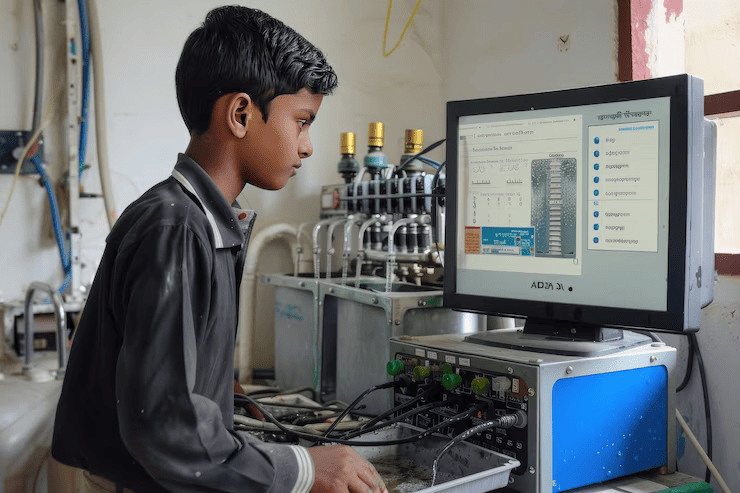
It involves a combination of sampling, culturing, instrumental analysis, and reporting, all following international standards like ISO, USP, or FDA cGMP.
🔬 1. Step-by-Step Process of Required Micro Testing
| Step | Description |
|---|---|
| 1. Sample Collection | Samples are collected aseptically from raw materials, finished products, air, water, surfaces, or personnel. |
| 2. Sample Preparation | Samples are diluted, homogenized, or filtered based on test type and product matrix. |
| 3. Inoculation | The sample is placed on a culture medium (e.g., nutrient agar, MacConkey agar) using pour plate, spread plate, or membrane filtration methods. |
| 4. Incubation | Plates are incubated under controlled conditions (e.g., 35–37°C for bacteria, 25°C for fungi) for 24–72 hours. |
| 5. Observation & Enumeration | Colonies are counted manually or using colony counters. Specific tests identify morphology or use staining, biochemical, or molecular methods. |
| 6. Pathogen Identification | Confirmatory tests for specific pathogens using biochemical kits, PCR, ELISA, MALDI-TOF, etc. |
| 7. Data Interpretation | Results are compared against acceptable microbial limits (as per standards like FSSAI, USP, ISO 22964, etc.). |
| 8. Reporting & Documentation | Results are recorded in lab notebooks or LIMS and released for QA clearance, regulatory filing, or client communication. |
⚙️ 2. Types of Microbiological Tests Commonly Used
| Test Name | Purpose |
|---|---|
| Total Viable Count (TVC) | General indication of microbial load. |
| Yeast and Mold Count | Checks fungal contamination. |
| Coliform Count / E. coli | Indicator of fecal contamination. |
| Salmonella, Listeria, S. aureus | Pathogen detection. |
| Sterility Test | Confirms absence of microorganisms. |
| Endotoxin Test (LAL Test) | Used in pharma and medical devices. |
| Antimicrobial Effectiveness Testing (AET) | Ensures preservative systems are working (cosmetics & pharma). |
🧰 3. Instruments and Tools Used
- Autoclave – for sterilization
- Laminar Air Flow (LAF) – sterile environment for sample prep
- Incubators – for growing microorganisms
- pH meter & water bath
- Membrane filtration system
- Microbial air samplers
- Automated colony counters
- PCR & ELISA analyzers
- Biochemical test kits or VITEK system for rapid identification
📜 4. Standards & Guidelines Followed
- ISO 17025 – Lab competence
- USP <61>, <62>, <71> – Microbial limits & sterility
- FSSAI – Indian food safety norms
- WHO-GMP / Schedule M – Pharma manufacturing
- ISO 21149, 22717, 18415 – Cosmetics micro testing
- EPA 1604, BIS 10500:2012 – Water testing
📈 5. Output: Interpretation of Results
| Result | Action |
|---|---|
| ✅ Within Limits | Product is safe for release or use. |
| ⚠️ Marginal/Borderline | Investigate further; monitor closely. |
| ❌ Exceeds Limits | Reject batch, investigate root cause (CAPA), re-test. |
✅ Summary:
Required Micro Testing is performed using validated scientific methods that include aseptic sampling, culture-based techniques, rapid detection tools, and strict documentation. It ensures products meet microbial safety standards and complies with industry and regulatory expectations.
Case Study on Micro?
Title: Ensuring Microbial Safety in Packaged Drinking Water – A Case Study from Vasai, Maharashtra
🏭 Background:
A medium-scale packaged drinking water company in Vasai, Maharashtra, was facing customer complaints related to bad odor and taste in bottled water. Some consumers also reported mild gastrointestinal issues after consumption. The company had all the necessary FSSAI licenses but lacked a structured microbiological testing routine.
🎯 Objective:
To identify the root cause of contamination and implement a microbiological quality control system to comply with IS 14543:2016 and FSSAI standards for packaged drinking water.
🧪 Approach: Microbiological Testing Implementation
Phase 1: Problem Identification
- Collected samples from:
- Raw water inlet
- RO output
- Bottling line nozzle
- Final packaged product
- Initial lab reports showed:
- High Total Plate Count (TVC) in final product (>200 CFU/ml)
- Presence of Coliforms and Pseudomonas aeruginosa
- Source: Biofilm buildup in the filling nozzle and infrequent UV lamp maintenance
Phase 2: Corrective Actions
- Complete shutdown of the bottling line.
- High-pressure cleaning and sanitization of all water tanks and pipelines.
- Replaced faulty UV lamps and added online UV disinfection post-RO.
- Retrained staff on GMP hygiene practices.
- Implemented daily:
- Water micro testing (TVC, Coliform, E. coli)
- Air sampling in the packaging room
- Swab testing on nozzles and operator gloves
- Partnered with a NABL-accredited lab in Mumbai for weekly validation.
📊 Results (Within 3 Weeks):
| Parameter | Before | After |
|---|---|---|
| TVC (CFU/ml) | 250–600 | <10 |
| Coliform | Detected | Not Detected |
| Pseudomonas | Detected | Not Detected |
| Consumer complaints | 5/month | 0 in last 3 months |
🏆 Outcomes & Benefits:
- Regained consumer trust
- Achieved zero microbiological deviation in audits
- Obtained ISO 22000:2018 certification within 6 months
- Became a preferred vendor for 3 new retail chains
🧩 Lessons Learned:
- Micro testing is not just regulatory—it’s essential for brand survival.
- Regular environmental and personnel monitoring is as important as product testing.
- Small investments in micro lab outsourcing and hygiene training led to long-term savings and growth.
✅ Conclusion:
This case study highlights how Required Micro Testing acts as a preventive and diagnostic tool. It ensures not just regulatory compliance but also product quality, consumer safety, and business continuity, especially in sensitive sectors like drinking water, food, and pharmaceuticals.
White paper on Micro?
Title: Enhancing Product Safety and Regulatory Compliance through Microbiological Testing
Author: Six Sigma Labs – Quality & Compliance Division
Published: June 2025
🔍 Executive Summary:
Microbiological contamination poses significant risks to consumer health, product quality, and brand reputation. In regulated industries such as food & beverage, pharmaceuticals, cosmetics, and water treatment, Required Micro Testing is a cornerstone of quality assurance and compliance. This white paper explores the rationale, methodologies, regulatory expectations, and strategic benefits of implementing robust microbiological testing programs.
📚 1. Introduction
Microorganisms like bacteria, molds, yeasts, and viruses are ubiquitous. While many are harmless, certain strains can cause product spoilage, infection, or even fatal illness. Industries that produce consumables or sterile products must adopt systematic microbiological testing to:
- Detect harmful organisms
- Prevent contamination
- Meet legal and quality standards
📊 2. Why Micro Testing is Required
A. Regulatory Compliance:
| Authority | Applicable Regulation |
|---|---|
| FSSAI (India) | Schedule 4, IS Standards |
| FDA (USA) | 21 CFR Parts 110, 111, 210, 211 |
| WHO-GMP | Microbial Limits in Pharma |
| ISO | 17025, 22000, 22717, 13485 (for labs, food, cosmetics, medical devices) |
B. Consumer Safety and Brand Integrity
- Prevents outbreaks and recalls
- Protects immunocompromised populations
- Maintains shelf-life and sensory properties
⚙️ 3. Common Microbiological Tests
| Test | Purpose |
|---|---|
| Total Viable Count (TVC) | Indicates overall microbial load |
| Yeast & Mold Count | Detects fungal contamination |
| Coliform / E. coli Detection | Indicates fecal contamination |
| Salmonella / Listeria / S. aureus | Pathogen-specific detection |
| Sterility Testing | Confirms absence of viable microbes |
| Endotoxin (LAL) Test | Detects bacterial endotoxins in injectables |
| Antimicrobial Effectiveness Testing | Validates preservative systems (cosmetics/pharma) |
🧪 4. Methods and Technologies
- Classical Culture Methods (spread/pour plate, membrane filtration)
- Rapid Microbial Detection (PCR, ELISA, ATP bioluminescence)
- Air Sampling & Swab Testing (environmental and personnel hygiene)
- Automated Systems: VITEK, MALDI-TOF, LIMS integration
🏭 5. Implementation Strategy
A. Risk-Based Testing Plan:
- Identify Critical Control Points (CCPs)
- Frequency: Daily, batch-wise, weekly, etc.
- Customize for product type (sterile vs non-sterile)
B. Infrastructure & SOPs:
- Dedicated cleanrooms, micro labs, or NABL-accredited outsourcing
- Documented protocols as per ISO 17025 or GMP
C. Staff Training & Hygiene Audits:
- Hands-on SOPs for sampling
- Personnel hygiene monitoring
💡 6. Case Insights (Brief):
Case: Bottled Water Contamination, Vasai
A packaged water unit eliminated microbial risk and achieved ISO 22000 by installing inline UV systems, conducting daily TVC & coliform tests, and retraining staff.
📈 7. Business Impact
| Metric | Impact |
|---|---|
| Product Recalls | Reduced by up to 90% |
| Audit Success Rate | Improved to 98% |
| Customer Complaints | Dropped significantly |
| Certification Eligibility | Enabled for ISO, GMP, HACCP |
🔚 8. Conclusion
Required Micro Testing is a non-negotiable quality practice for modern manufacturing. It not only fulfills statutory obligations but also acts as a proactive defense mechanism against microbial threats. Organizations that institutionalize microbiological safety culture will benefit from improved brand trust, market expansion, and operational excellence.
📌 Recommendations
- Integrate micro testing into your QMS and HACCP plans
- Collaborate with accredited laboratories
- Use data analytics from LIMS for predictive quality control
Industrial Application of Micro?
Title: Real-World Use Cases of Microbiological Testing Across Key Industries
Required Micro Testing plays a vital role in maintaining product safety, quality assurance, compliance, and consumer protection. Below are major industrial sectors where microbiological testing is not just routine, but mandatory to ensure zero-defect, contamination-free production.
1. 🥗 Food & Beverage Industry
Applications:
- Testing raw ingredients (milk, flour, water, fruits) for microbial load.
- Final product testing for pathogens like Salmonella, Listeria, E. coli, and S. aureus.
- Environmental swab testing in processing zones.
- Validation of clean-in-place (CIP) systems.
- Shelf-life studies for spoilage organisms.
Standards Used:
FSSAI, ISO 22000, HACCP, BRC, Codex Alimentarius
2. 💊 Pharmaceutical & Biotech Industry
Applications:
- Sterility testing of injectable drugs, eye drops, and IV fluids.
- Endotoxin (LAL) tests for vaccines and biologics.
- Microbial limits in tablets, creams, syrups.
- Cleanroom and environmental monitoring (air, surface, glove tests).
- Water testing (Purified Water, WFI) for total bacterial count.
Standards Used:
WHO-GMP, USP <61>, <62>, <71>, ISO 13485, Schedule M, PIC/S
3. 💧 Water Industry (Drinking, RO, Bottling)
Applications:
- Testing for coliforms, E. coli, and Pseudomonas in bottled water.
- Microbial quality of municipal and industrial water supply.
- Routine testing of RO output and storage tanks.
- Regular swab testing of nozzles, caps, and bottling lines.
Standards Used:
IS 14543, BIS 10500, FSSAI, WHO Drinking Water Guidelines
4. 💄 Cosmetics & Personal Care
Applications:
- Testing creams, lotions, shampoos for TVC, yeast, mold.
- Preservative effectiveness testing (PET/AET).
- Batch-wise microbial limits for face packs, body sprays, and oils.
- Cleanroom and personnel hygiene monitoring during filling.
Standards Used:
ISO 22717 (S. aureus), ISO 18415 (PET), FDA CFR 21 Part 700
5. 🏥 Healthcare & Hospitals
Applications:
- Monitoring operation theatres, ICUs, and sterilized instruments.
- Microbial testing of disinfectants and hospital-grade chemicals.
- Air quality testing in surgical and patient zones.
- Hand and glove swab testing for infection control audits.
Standards Used:
NABH, WHO Infection Prevention & Control (IPC), JCI, CDC Guidelines
6. 🧼 Dairy and Meat Processing Plants
Applications:
- Bulk milk testing for Listeria, E. coli, and Clostridium.
- Swab testing on equipment: pasteurizers, conveyors, cutting surfaces.
- Water and packaging material microbial checks.
- Chiller hygiene and ambient air microbial load.
Standards Used:
FSSAI, ISO 22005, EU 2073/2005 (Micro Criteria), Codex Dairy Guidelines
7. 🏗️ Packaging & Logistics
Applications:
- Testing packaging materials (bottles, caps, wrappers) for microbial residue.
- Ensuring sterile barrier integrity in medical packaging.
- Monitoring storage warehouses for mold and bacterial growth.
Standards Used:
ISO 11607-1, ASTM F1608, EU GMP Annex 1 (for sterile packaging)
8. 🌿 Agrochemical & Fertilizer Manufacturing
Applications:
- Microbial purity of bio-fertilizers (e.g., Azotobacter, Rhizobium).
- Shelf-life testing of bio-pesticides.
- Testing of effluent for microbial contamination before discharge.
Standards Used:
FCO Biofertilizer Guidelines, CPCB Standards, ISO 17025
✅ Summary of Benefits
| Benefit | Industry Impact |
|---|---|
| 🛡️ Safety Assurance | Prevents illness and recalls |
| 📜 Compliance | Meets regulatory and export standards |
| 🔬 Quality Control | Ensures batch-to-batch consistency |
| 📈 Brand Value | Builds consumer trust |
| 💰 Cost Savings | Reduces waste, reprocessing, and penalties |
References
- ^ International Bureau of Weights and Measures (2006), The International System of Units (SI) (PDF) (8th ed.), ISBN 92-822-2213-6, archived (PDF) from the original on 2021-06-04, retrieved 2021-12-16
- ^ “MICR,” Merriam-Webster.com Dictionary, https://www.merriam-webster.com/dictionary/MICR. Accessed 10/13/2024.
- ^ Jump up to:a b “ISMP List of Error-Prone Abbreviations, Symbols, and Dose Designations: Abbreviations for Doses/Measurement Units”. Recommendations. Institute for Safe Medication Practices (ISMP). 2021-02-05. Archived from the original on 2022-12-24. Retrieved 2022-12-24.
Error-Prone Abbreviations, Symbols, and Dose Designations: μg […] Intended Meaning: Microgram […] Misinterpretation: Mistaken as mg […] Best Practice: Use mcg […]
- ^ Ley, Brian (1999). Elert, Glenn (ed.). “Diameter of a human hair”. The Physics Factbook. Retrieved 2018-12-08.
- ^ Biology by Campbell & Reece, tenth edition. Ch. 6 “A Tour of the Cell”. p. 98.
- ^ Jump up to:a b “On the extension of the range of SI prefixes”. 2022-11-18. Retrieved 2023-02-05.
- ^ “Metric (SI) Prefixes”. NIST.
- ^ Prefixes of the International System of Units, International Bureau of Weights and Measures (page visited on 9 May 2016).
- ^ (Unicode 1.0, 1991)
- ^ Unicode Technical Report #25
- ^ ISO 2955-1974: Information processing – Representations of SI and other units for use in systems with limited character sets (1st ed.). 1974.
- ^ “Table 2”. ISO 2955-1983: lnformation processing – Representations of SI and other units for use in systems with limited character sets (PDF) (2nd ed.). 1983-05-15. Retrieved 2016-12-14. [1]
- ^ DIN 66030: Darstellungen von Einheitennamen in Systemen mit beschränktem Schriftzeichenvorrat (in German) (1st ed.). 1980.
- ^ “Neue Normen für die Informationsverarbeitung”. Computerwoche (in German). 1981-01-09. Archived from the original on 2016-12-14. Retrieved 2016-12-14.
- ^ Jump up to:a b c Burtis, Carl A.; Ashwood, Edward R.; Bruns, David E. (2012), Tietz Textbook of Clinical Chemistry and Molecular Diagnostics (5th ed.), Elsevier Health Sciences, ISBN 978-1455759422.
- ^ “Commonly Used UCUM Codes for Healthcare Units”. HL7 Deutschland e.V. 2015-11-21. Archived from the original on 2022-10-06. Retrieved 2022-12-24.
- “micrometre”. Encyclopædia Britannica Online. Retrieved 18 May 2014.
- ^ “Wool Fibre”. NSW Department of Education and Communities. Archived from the original (Word Document download) on 17 June 2016. Retrieved 18 May 2014.
- ^ Ramel, Gordon. “Spider Silk”. Archived from the original on 4 December 2008. Retrieved 14 December 2008.
A typical strand of garden spider silk has a diameter of about 0.003 mm … Dragline silk (about .00032 inch (.008 mm) in Nephila)
- ^ Smith, D.J.; Gaffney, E.A.; Blake, J.R.; Kirkman-Brown, J.C. (25 February 2009). “Human sperm accumulation near surfaces: a simulation study” (PDF). Journal of Fluid Mechanics. 621. Cambridge University Press: 295. Bibcode:2009JFM…621..289S. doi:10.1017/S0022112008004953. S2CID 3942426. Archived from the original (PDF) on 6 November 2013.
- ^ “Red Blood Cell (RBC) Size Variation”. www.labce.com. Retrieved 20 February 2025.
- ^ “Fibreshape applications”. IST – Innovative Sintering Technologies Ltd. Retrieved 4 December 2008.
Histogram of Fiber Thickness [micrometre]
- ^ The diameter of human hair ranges from 17 to 181 μm. Ley, Brian (1999). Elert, Glenn (ed.). “Diameter of a human hair”. The Physics Factbook. Retrieved 8 December 2018.
- ^ BIPM – Resolution 7 of the 13th CGPM 1967/68), “Abrogation of earlier decisions (micron, new candle.)”
- ^ “Writing with SI (Metric System) Units”. NIST. 13 January 2010.
- ^ Wells, John C. (2008). Longman Pronunciation Dictionary (3rd ed.). Longman. ISBN 978-1-4058-8118-0.
- ^ Proceedings of the Royal Society of Queensland. Part I. Vol. XIX. H. Pole & Co. 1907 – via Google Books.
- ^ Bigalow, Edward Fuller; Agassiz Association (1905). The Observer. Vol. 7–8 – via Google Books.
- ^ 10 micra/10 microns (Start at 1885; before that, the word “micron”, singular or plural, was rare)
- ^ “Prefixes of the International System of Units”. International Bureau of Weights and Measures. Archived from the original on 23 May 2018. Retrieved 9 May 2016.
- ^ Beeton, Barbara; Freytag, Asmus; Sargent, Murray III (30 May 2017). “Unicode Technical Report #25”. Unicode Technical Reports. Unicode Consortium. p. 11.
- ^ John C. Mutchler, ed. (1999). The American Directory of Writer’s Guidelines: A Compilation of Information for Freelancers from More Than 1,300 Magazine Editors and Book Publishers (2 ed.). Quill Driver Books. p. 47. ISBN 978-1-884956-08-9.
- “Books and Movies,” Michael Crichton: The Official Site. MichaelCrichton.com. 1997–2012, Constant C Productions.
- ^ “Micro”. Online Catalog Entry. HarperCollinsCatalogs.com. Fall 2011, Harper Collins.
- ^ Warren, Marla E. (July 19, 2011). “What Michael Crichton said about Micro”. MusingsOnMichaelCrichton.com.
- ^ Kit, Borys (June 26, 2015). “DreamWorks Picks Up Michael Crichton’s ‘Micro'”. The Hollywood Reporter. Retrieved June 26, 2015.
- ^ Baker, Tom (June 27, 2015). “Steven Spielberg Developing Adaptation Of Michael Crichton’s ‘Micro'”. ScreenRant. Retrieved June 28, 2015.
- ^ Fleming, Mike Jr. (April 6, 2017). “Pirates Helmer Joachim Rønning To Direct Micro, Last Michael Crichton Novel”. Deadline. Retrieved April 6, 2017.
- ^ Wiseman, Andreas (October 11, 2018). “Amblin Brings On ‘Liberty Road’ Scribes Widener & James For Adaptation Of Michael Crichton’s Last Novel ‘Micro'”. Deadline. Retrieved June 29, 2023.
- Zimmer, Ben (July 29, 2010). “How Should ‘Microphone’ be Abbreviated?”. The New York Times. Retrieved September 10, 2010.
- ^ Okrent, Arika (July 20, 2015). “Is a Microphone a ‘Mic’ or a ‘Mike’?”. Mental Floss. Retrieved February 13, 2024.
- ^ Abadi, Mark (November 20, 2017). “Everyone Is Blasting Trump for Writing ‘Mike’ Instead of ‘Mic’ — but Here’s Why Trump Is Right”. Business Insider. Retrieved February 13, 2024.
- ^ Montgomery, Henry C. (1959). “Amplification and High Fidelity in the Greek Theater”. The Classical Journal. 54 (6): 242–245. JSTOR 3294133.
- ^ McVeigh, Daniel (2000). “An Early History of the Telephone: 1664–1866: Robert Hooke’s Acoustic Experiments and Acoustic Inventions”. Archived from the original on September 3, 2003.
- ^ Lander, Jack (July 1, 2017). “Who Invented the Telephone?”. Inventors Digest. Archived from the original on December 1, 2022.
- ^ MacLeod, Elizabeth (1999). Alexander Graham Bell: An Inventive Life. Toronto: Kids Can Press.
- ^ Nahin, Paul J. (2002). Oliver Heaviside: The Life, Work, and Times of an Electrical Genius of the Victorian Age. JHU Press. p. 67. ISBN 9780801869099.
- ^ Estreich, Bob. “David Edward Hughes”. Archived from the original on November 1, 2019. Retrieved December 30, 2013.
- ^ Jump up to:a b Huurdeman, Anton (2003). The Worldwide History of Telecommunications. John Wiley & Sons.
- ^ “David Hughes”. Retrieved December 17, 2012.
- ^ Wile, Frederic Willam 1926 Emile Berliner: Maker of the Microphone, The Bobbs-Merrill Company Publishers, Indianapolis
- ^ “David Edward Hughes: Concertinist and Inventor” (PDF). Archived from the original (PDF) on December 31, 2013. Retrieved December 17, 2012.
- ^ Jump up to:a b Robjohns, Hugh (2001). “A Brief History of Microphones” (PDF). Microphone Data Book. Archived from the original (PDF) on November 25, 2010.
- ^ Schwertly, Scott. “The History of the Microphone”. Ethos3.com. Retrieved May 9, 2023.
- ^ Fagen, M.D. A History of Engineering and Science in the Bell System: The Early Years (1875–1925). New York: Bell Telephone Laboratories, 1975
- ^ Hennessy, Brian (2005). The Emergence of Broadcasting in Britain. Southerleigh. ISBN 9780955140808.
- ^ “The Marconi-Sykes Magnetophone”. Retrieved June 18, 2018.
- ^ “1931 Harry F. Olson and Les Anderson, RCA Model 44 Ribbon Microphone”. Mix Magazine. September 1, 2006. Archived from the original on March 24, 2008. Retrieved April 10, 2013.
- ^ Kahn, Al (1953). “Time Capsule: History of Electro-Voice”. ProSoundWeb.com. Archived from the original on December 12, 2008. Retrieved February 14, 2023.
- ^ “History – The evolution of an audio revolution”. Shure Americas. Archived from the original on September 15, 2012. Retrieved April 13, 2013.
- ^ “Bell Laboratories and The Development of Electrical Recording”. Stokowski.org (Leopold Stokowski site). Archived from the original on June 21, 2023.
- ^ “Electromechanical Transducer”. Britannica. Retrieved June 2, 2024.
- ^ Sessler, G.M.; West, J.E. (1962). “Self-Biased Condenser Microphone with High Capacitance”. Journal of the Acoustical Society of America. 34 (11): 1787–1788. Bibcode:1962ASAJ…34.1787S. doi:10.1121/1.1909130.
- ^ Van Rhijn, Arie. “Integrated Circuits for High Performance Electret Microphones”. National Semiconductor. Archived from the original on August 19, 2010.
- ^ Institute BV Amsterdam, SAE. “Microphones”. Practical Creative Media Education. Retrieved March 7, 2014.
- ^ “Local firms strum the chords of real music innovation”. Mass High Tech: The Journal of New England Technology. February 8, 2008. Archived from the original on February 19, 2008.
- ^ “Boudet’s Microphone”. Machine-History.com. Archived from the original on August 22, 2015.
- ^ “Brown Type G Telephone Relay Owned by Edwin Howard Armstrong”. National Museum of American History. Retrieved June 15, 2022.
- ^ Lee, Woon Seob; Lee, Seung S. (2008). “Piezoelectric Microphone Built on Circular Diaphragm” (PDF). Sensors and Actuators A. 144 (2): 367–373. Bibcode:2008SeAcA.144..367L. doi:10.1016/j.sna.2008.02.001. Archived from the original (PDF) on July 17, 2013. Retrieved March 28, 2023.
- ^ Paritsky, Alexander; Kots, A. (1997). Shladov, Itzhak; Rotman, Stanley R (eds.). “Fiber optic microphone as a realization of fiber optic positioning sensors”. 10th Meeting on Optical Engineering in Israel. 3110: 408–409. Bibcode:1997SPIE.3110..408P. doi:10.1117/12.281371. S2CID 110338054.
- ^ US 6462808, Alexander Paritsky and Alexander Kots, “Small Optical Microphone/Sensor”, published October 8, 2002
- ^ Karlin, Susan. “Case Study: Can You Hear Me Now?”. RT-Image.com. Valley Forge Publishing. Archived from the original on July 15, 2011.
- ^ Goulde, Berg (February 9, 2017). “15 Best Microphones for Computer”. Microphone top gear. Retrieved March 20, 2023.
- ^ Rose, Bruce (January 8, 2019). “Comparing MEMS and Electret Condenser (ECM) Microphones”. CUIDevices.com. Retrieved March 27, 2023.
- ^ “Cirrus Logic Completes Acquisition of Wolfson Microelectronics”. MarketWatch.com. Retrieved August 21, 2014.
- ^ “Analog Devices to Sell Microphone Product Line to InvenSense” (Press release). Analog Devices. Retrieved November 27, 2015.
- ^ “Knowles Completes Acquisition of NXP’s Sound Solutions Business”. Knowles. Retrieved July 5, 2011.
- ^ “MEMS Microphone Will Be Hurt by Downturn in Smartphone Market”. Seeking Alpha. August 23, 2009. Retrieved August 23, 2009.
- ^ “OMRON to Launch Mass-Production and Supply of MEMS Acoustic Sensor Chip”. Retrieved November 24, 2009.
- ^ “MEMS Mics Taking Over”. EETimes.
- ^ Akino, Hiroshi; Shimokawa, Hirofumi; Kikutani, Tadashi; Green, Jackie (April 2014). “On the Study of the Ionic Microphone”. Journal of the Audio Engineering Society. 62 (4): 254–264. doi:10.17743/jaes.2014.0013.
- ^ Crane, Larry (July 2004). “Yamaha SubKick – The Tape Op Review”. RecordingHacks.com. Retrieved April 11, 2023.
- ^ Bartlett, Bruce. “How a Cardioid Microphone Works”. Archived from the original on December 12, 2016. Retrieved February 12, 2015.
- ^ “Types of microphones”. MicSpeech. April 12, 2019.