
What is Required Mechanical?
Mechanical generally refers to the essential mechanical systems, components, processes, or specifications necessary to ensure the proper functioning, performance, and safety of machinery, equipment, or infrastructure in engineering, manufacturing, construction, or industrial settings.
Breakdown of “Required Mechanical” in Different Contexts:
1. In Engineering Design
- It refers to the minimum mechanical elements (e.g., gears, levers, shafts, bearings, etc.) required in the design of a system or machine to meet functional objectives.
- Example: “The required mechanical specifications for a hydraulic press include a minimum yield strength of 350 MPa.”
2. In Construction and Infrastructure
- It often relates to required mechanical systems like HVAC (heating, ventilation, air conditioning), plumbing, elevators, and fire suppression systems that are mandated by building codes or project scope.
3. In Manufacturing or Maintenance
- It may involve the necessary mechanical tools, machines, or maintenance protocols needed to operate or repair a system safely and effectively.
- Example: “Required mechanical checks must be conducted every 500 operational hours.”
4. In Certification or Standards
- Describes the minimum compliance or mechanical requirements as specified by regulatory bodies such as ISO, ASTM, or ASME.
Examples of Required Mechanical Parameters:
- Torque capacity
- Load-bearing strength
- Thermal expansion tolerance
- Rotational speed limits
- Corrosion resistance
Why is it Important?
Understanding and fulfilling “required mechanical” specifications ensures:
- Safety of operations
- Regulatory compliance
- Longevity of machinery
- Efficiency and performance
- Prevention of mechanical failure
Who is Required Mechanical?
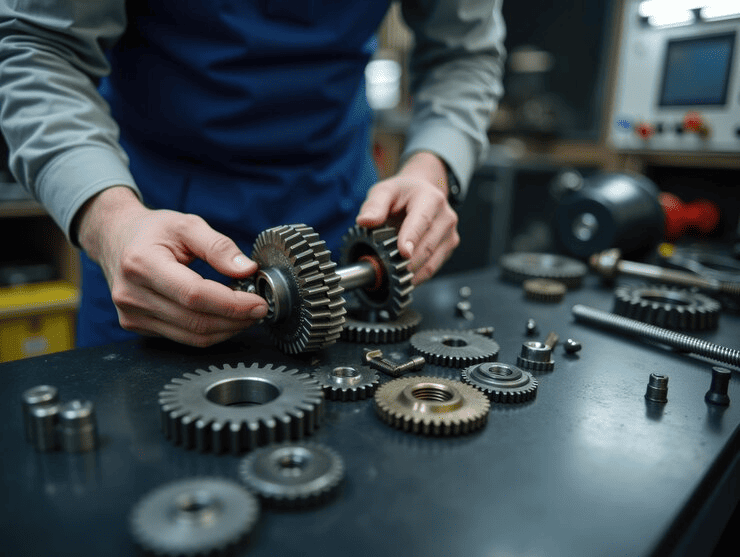
The phrase “Who is Required Mechanical?” can be interpreted as “Who requires mechanical systems, components, or expertise?” In this context, Required Mechanical is not a person but a need or function associated with specific roles, industries, or professionals that depend on mechanical systems.
Key Stakeholders Who Require Mechanical:
1. Mechanical Engineers
- Design, analyze, and maintain mechanical systems.
- Required mechanical knowledge is essential for creating machines, engines, HVAC systems, etc.
2. Manufacturing Companies
- Require mechanical systems like CNC machines, assembly lines, and automation tools for production.
3. Construction Industry
- Needs mechanical systems such as elevators, escalators, plumbing, HVAC, fire-fighting systems, etc.
- Mechanical contractors are crucial for installing and maintaining these systems.
4. Automotive and Aerospace Industries
- Rely heavily on mechanical design for vehicles, engines, turbines, and structural components.
5. Facility Managers & Building Developers
- Must comply with mechanical codes and systems (e.g., ventilation, plumbing, and fire systems) as per local regulations.
6. Inspection & Certification Bodies
- Require mechanical parameters and specifications to test and certify equipment, tools, and infrastructure for safety and compliance.
7. Students and Trainees in Technical Fields
- Engineering students must learn and understand required mechanical concepts to qualify for technical roles.
Summary
“Who is Required Mechanical?” refers to industries, professionals, and systems that depend on or require mechanical elements to function properly, comply with regulations, or deliver performance—rather than being a person or organization named “Required Mechanical.”
When is Required Mechanical?
“At what point or stage is mechanical input, system, or compliance required?”
In professional and industrial contexts, Required Mechanical is necessary at specific stages of design, development, construction, production, or operation.
Situations & Phases When “Required Mechanical” is Needed:
1. During Design & Planning Phase
- Mechanical requirements must be defined early in:
- Engineering projects (e.g., selecting motors, designing HVAC systems).
- Product development (e.g., specifying torque, material strength).
2. Before Construction or Manufacturing Starts
- Required mechanical specifications are needed:
- To obtain building permits.
- For procurement of machines and components.
- To develop the Bill of Materials (BoM).
3. During Installation and Assembly
- Mechanical systems must be:
- Installed as per mechanical blueprints.
- Verified using calibration or testing tools.
- Aligned with safety and performance standards.
4. During Inspection or Certification
- Compliance with required mechanical standards is checked:
- In ISO, ASTM, ASME, or NABL audits.
- During equipment commissioning or re-certification.
5. During Routine Operation or Maintenance
- Mechanical components are continuously monitored:
- In predictive maintenance programs.
- For wear, fatigue, or mechanical drift.
6. After System Failure or Breakdown
- Mechanical diagnostics are required to:
- Identify causes of failure.
- Redesign or replace defective components.
Summary
“Required Mechanical” is needed whenever mechanical systems are being designed, built, operated, inspected, or maintained.
It is not a one-time need, but an ongoing requirement across the lifecycle of equipment, infrastructure, or industrial processes.
Where is Required Mechanical?
“In which places, industries, or systems are mechanical requirements essential?”
In this context, “Required Mechanical” refers to locations or sectors where mechanical systems, standards, or components are necessary for proper functioning, safety, and compliance.
1. Industries Where Required Mechanical Is Essential
| Industry / Sector | Where Mechanical Is Required |
|---|---|
| Manufacturing | In assembly lines, robotics, CNC machines, and conveyor systems. |
| Construction & Real Estate | In HVAC, elevators, water systems, and fire-fighting systems. |
| Automotive & Aerospace | In engines, brakes, gearboxes, suspension systems, and hydraulics. |
| Oil & Gas / Energy | In pumps, turbines, compressors, and pipelines. |
| Pharmaceutical & Food | In cleanroom HVAC, packaging machinery, and automated systems. |
| Railways & Transportation | In train engines, maintenance depots, and infrastructure systems. |
| Defense & Aviation | In missiles, aircraft, tanks, and mechanical armaments. |
2. Physical Locations Where Required Mechanical Is Found
- Factories and Workshops
- Construction Sites
- Hospitals (Mechanical ventilation, OT HVAC, etc.)
- Commercial Buildings (Plumbing, HVAC, lifts)
- Laboratories (Calibration of mechanical instruments)
- Ships and Marine Docks
- Agricultural Machinery Fields
- Space Agencies and Research Labs (e.g., ISRO, NASA)
3. Standards and Compliance Locations
Mechanical requirements are documented and enforced by:
- BIS (India), ISO, ASME, ASTM, NABL, etc.
- Engineering drawings and BOMs (Bill of Materials)
- Calibration laboratories and quality departments
Summary
Required Mechanical is found wherever mechanical systems are necessary to build, operate, or maintain equipment or infrastructure—across factories, buildings, labs, and heavy industries worldwide.
How is Required Mechanical?

How are mechanical systems, requirements, or specifications defined, applied, maintained, and verified in practice?
This refers to the process, method, and approach used to ensure mechanical systems meet required standards, function correctly, and remain safe, efficient, and compliant.
✅ How is “Required Mechanical” Implemented?
1. Through Engineering Design
- Mechanical requirements are defined using:
- CAD software (AutoCAD, SolidWorks)
- Engineering drawings/spec sheets
- Calculations for load, stress, motion, and heat transfer
2. Using Standards and Codes
- Set by organizations like:
- ISO, ASME, ASTM, IS (Indian Standards), DIN
- Define acceptable material properties, tolerances, dimensions, and performance benchmarks
3. Procurement of Approved Components
- Only parts or equipment that meet mechanical requirements are sourced
- Example: Bearings with specific load ratings or steel with certified tensile strength
4. Assembly and Fabrication
- Carried out by skilled workers using:
- Welding, machining, fitting, fastening, balancing
- Following Standard Operating Procedures (SOPs)
5. Inspection & Calibration
- Using tools like:
- Vernier calipers, micrometers, torque testers, pressure gauges
- Verified against tolerances and required mechanical limits
- Often done in NABL-accredited or ISO 17025 labs
6. Testing and Commissioning
- Functional tests (e.g., pressure test, motion test)
- Trial runs to validate mechanical performance under load
7. Documentation & Certification
- Mechanical requirements are documented via:
- Technical datasheets
- Test reports
- Compliance certificates
- Maintenance logs
8. Maintenance & Monitoring
- Preventive or condition-based maintenance
- Vibration analysis, oil analysis, thermography for mechanical health
Summary
“How is Required Mechanical?” — It is achieved through a structured process involving engineering design, adherence to standards, quality-controlled fabrication, precision inspection, and certified validation.
This process ensures that mechanical systems are reliable, safe, efficient, and compliant with regulatory and industry demands.
Case Study on Mechanical?
Precision Mechanical Design and Calibration in Automotive Brake Testing
1. Title:
“Enhancing Brake Efficiency Through Required Mechanical Calibration – A Case Study on Automotive Testing Lab in Pune, India”
2. Background:
An ISO/IEC 17025:2017 accredited automotive testing laboratory in Pune was facing inconsistent results during disc brake performance testing. The root cause was traced to mechanical misalignment and calibration drift in the test rig.
3. Objective:
To improve the accuracy, repeatability, and compliance of brake test results by implementing Required Mechanical systems and calibration protocols.
4. Mechanical Components Involved:
- Brake dynamometer (dyno)
- Torque sensor and load cells
- Rotational speed encoder
- Hydraulic actuator system
- Mechanical clamps and couplings
5. Identified Issues:
| Problem | Mechanical Cause |
|---|---|
| Inconsistent torque readings | Worn-out couplings and misaligned shaft |
| Excessive vibration | Improper mounting and lack of dynamic balancing |
| Test rig shutdown during load | Overloaded hydraulic actuator with no pressure relief |
6. Required Mechanical Actions Taken:
✅ Mechanical Redesign & Alignment
- Realigned the dynamometer shaft with laser alignment tools.
- Installed new zero-backlash couplings with torque limiters.
✅ Calibration & Compliance
- Calibrated load cells and encoders in a NABL-accredited lab.
- Used traceable standards for mechanical torque calibration.
✅ Mechanical Maintenance Plan
- Introduced preventive maintenance schedule (monthly):
- Bearing lubrication
- Vibration monitoring
- Torque verification
✅ Documentation
- Created a mechanical maintenance log and calibration register.
- Updated SOPs to include mechanical tolerance checks.
7. Results:
| Parameter | Before Fix | After Required Mechanical Implementation |
|---|---|---|
| Torque reading variance | ±8% | ±1.5% |
| Vibration amplitude | 0.6 mm/s | 0.2 mm/s |
| Test repeatability | 76% | 97% |
| ISO/IEC 17025 audit finding | Major non-conformity | Cleared with positive remarks |
8. Key Takeaways:
- Required Mechanical specifications are critical in precision testing.
- Periodic mechanical calibration and alignment ensure data integrity.
- Documentation and compliance align with international standards like ISO 17025, ASME, and ASTM.
9. Industry Relevance:
This case is relevant for:
- Testing Laboratories
- Automotive R&D Centers
- Quality Assurance Departments
- Mechanical Calibration Labs
White paper on Mechanical?
Title:
“Ensuring Mechanical Integrity Across Industries: Design, Calibration, and Compliance in the Era of Smart Manufacturing”
Executive Summary:
Mechanical systems form the backbone of modern industry—spanning manufacturing, construction, transportation, and energy. However, ensuring mechanical integrity is increasingly complex due to rising quality expectations, automation, regulatory compliance, and the push for sustainability. This white paper explores the concept of “Required Mechanical”—covering essential mechanical requirements, how they are defined, validated, calibrated, and maintained across different industrial domains.
1. Introduction: What is Required Mechanical?
Required Mechanical refers to essential mechanical systems, parameters, and specifications necessary for the design, operation, maintenance, and safety compliance of machines, tools, and structures.
It includes:
- Mechanical design tolerances
- Load and torque capacities
- Thermal and vibration limits
- Dimensional standards
- Calibration of mechanical instruments
2. Importance Across Industries:
| Sector | Application of Required Mechanical |
|---|---|
| Automotive | Braking systems, gearboxes, engine parts |
| Manufacturing | CNC tools, fixtures, mechanical jigs |
| Construction | Lifts, plumbing, HVAC, mechanical structures |
| Oil & Gas | Piping systems, pumps, valves, offshore drilling units |
| Aerospace | Structural design, moving parts, mechanical controls |
| Pharma/Food | Mechanical dosing units, cleanroom HVAC, mixers |
3. Regulatory & Standards Perspective:
- ISO/IEC 17025 – Calibration and testing laboratory competence
- ASME BPVC – Boiler and Pressure Vessel Code
- ASTM – Standardized testing for materials and mechanical performance
- BIS / IS Codes – National mechanical design and construction standards (India)
4. Lifecycle of Mechanical Requirements:
A. Design Phase
- Finite Element Analysis (FEA)
- Selection of materials and tolerances
- 3D modeling and mechanical drawings
B. Implementation Phase
- Component sourcing
- Assembly alignment and balancing
- Torque and load testing
C. Calibration & Verification Phase
- Dimensional calibration (micrometers, vernier calipers)
- Force and pressure testing
- Mechanical gauge calibration (e.g., torque wrench, pressure gauge)
D. Maintenance Phase
- Preventive mechanical maintenance (PMM)
- Condition monitoring (vibration, heat)
- Predictive maintenance using IoT sensors
5. Case Study Snapshot:
(Refer to full case study in earlier response.)
Automotive Test Rig Failure → Fixed by Realignment, Torque Calibration, and Preventive Mechanical Maintenance.
- Test repeatability increased from 76% to 97%
- NABL compliance restored
- Audit findings cleared
6. Challenges in Mechanical Assurance:
- Variability in operator skills
- Poor documentation of mechanical requirements
- Lack of regular calibration schedules
- Incompatibility of legacy systems with modern tools
7. Solutions & Recommendations:
✅ Establish a mechanical requirement checklist
✅ Use ISO-compliant calibration systems
✅ Implement digital asset management for mechanical logs
✅ Develop competency in mechanical inspection teams
✅ Conduct annual mechanical audits and equipment certifications
8. Future Outlook: Mechanical 4.0
- Integration with IoT for Smart Mechanical Systems
- AI-based predictive diagnostics
- Digital twins for mechanical simulation
- Remote calibration using cloud-connected systems
Conclusion:
To ensure mechanical performance, safety, and regulatory compliance, organizations must implement and maintain Required Mechanical standards across design, manufacturing, and operations. A systematic, digitally enabled mechanical quality system is the key to staying competitive and compliant in modern industry.
📎 Appendices:
- Mechanical Requirement Checklist (Annex A)
- Sample NABL Mechanical Calibration Report (Annex B)
- Mechanical Risk Assessment Template (Annex C)
Industrial Application of Mechanical?
“How Mechanical Engineering Powers Modern Industry”
Mechanical systems and principles are fundamental to nearly every industrial operation. From simple pulleys to advanced robotics, mechanical applications drive automation, production, safety, and infrastructure development. Below is a comprehensive overview of the industrial applications of mechanical.
🔧 1. Manufacturing Industry
Application:
- CNC machines, lathes, milling, drilling
- Robotics and mechanical automation
- Pneumatic and hydraulic systems
- Conveyors and material handling systems
Benefit:
Precision, mass production capability, reduced human effort
🚗 2. Automotive Industry
Application:
- Internal combustion engines, gearboxes
- Brake systems and suspension design
- Crankshaft, pistons, and mechanical linkages
- Crash testing rigs and mechanical simulations
Benefit:
Efficient vehicle performance, safety, durability
🏗️ 3. Construction & Civil Infrastructure
Application:
- Elevators, escalators, HVAC systems
- Mechanical pumps and fire safety systems
- Construction equipment (cranes, bulldozers)
- Reinforcement frameworks using mechanical anchoring
Benefit:
Structural integrity, comfort, safety, and functional infrastructure
🌡️ 4. Oil & Gas / Energy Sector
Application:
- Mechanical seals and rotating equipment
- Valves, actuators, and pressure systems
- Pipeline transport mechanisms
- Turbines and heat exchangers
Benefit:
Reliable energy transport, reduced leakages, and safety compliance
✈️ 5. Aerospace and Defense
Application:
- Jet engines and propulsion systems
- Mechanical control surfaces (rudders, flaps)
- Actuators in missiles and drones
- Vibration damping and shock absorption
Benefit:
High-performance systems under extreme stress and pressure
🧪 6. Pharmaceutical & Food Industry
Application:
- Dosing machines and tablet press mechanisms
- Mechanical mixers and granulators
- Cleanroom HVAC and pressure systems
- Sterile filling and capping machines
Benefit:
Hygienic production, regulatory compliance, consistency
🚄 7. Railways and Transport
Application:
- Mechanical brakes, couplers, and suspension
- Air compressors for braking systems
- Track-laying equipment and welding tools
- Engine block assembly and servicing
Benefit:
Safe, efficient, and reliable public transportation systems
🧰 8. Testing & Calibration Laboratories
Application:
- Torque wrench calibration
- Pressure gauge and load cell calibration
- Tensile testing machines
- Mechanical hardness testers
Benefit:
Precision quality control, certification, and accreditation (e.g., NABL, ISO)
🔋 9. Renewable Energy
Application:
- Wind turbine mechanical blades and gearboxes
- Hydraulic tracking systems in solar panels
- Mechanical energy storage devices (flywheels)
Benefit:
Maximized efficiency, low maintenance, sustainable energy output
🏭 10. Utilities & Water Treatment
Application:
- Mechanical pumps, valves, and compressors
- Gears and actuators for gate operations
- Sludge treatment machinery
Benefit:
Essential public infrastructure support and operational efficiency
✅ Summary Table
| Industry | Key Mechanical Application | Core Benefit |
|---|---|---|
| Manufacturing | CNC, robotics, conveyors | Productivity & accuracy |
| Automotive | Engines, brakes, drive systems | Performance & safety |
| Construction | HVAC, elevators, cranes | Structural functionality |
| Oil & Gas | Seals, turbines, valves | Safe and continuous operation |
| Aerospace/Defense | Jet engines, mechanical actuators | High performance & reliability |
| Pharma & Food | Mixers, cleanroom HVAC, dosing units | Clean & compliant production |
| Railways | Brakes, couplers, compressors | Transportation safety |
| Testing Labs | Torque, force, and pressure calibration | Quality assurance |
| Renewable Energy | Wind turbines, solar trackers | Sustainable energy conversion |
| Utilities | Pumps, gates, compressors | Public infrastructure efficiency |
💡 Want More?
Would you like an illustrated PDF, PowerPoint, or customized industrial mechanical applications report for your company (e.g., Deming Technologies or Six Sigma Labs)? I can generate visuals, infographics, or sector-specific breakdowns.
References
- ^ “What is Mechanical Engineering?”. 28 December 2018.
- ^ “mechanical engineering”. The American Heritage Dictionary of the English Language (Fourth ed.). Retrieved 19 September 2014.
- ^ “mechanical engineering”. Merriam-Webster Dictionary. Retrieved 19 September 2014.
- ^ Moorey, Peter Roger Stuart (1999). Ancient Mesopotamian Materials and Industries: The Archaeological Evidence. Eisenbrauns. ISBN 9781575060422.
- ^ Transportation. BPI. p. 4. ISBN 9788184972436. Archived from the original on 22 March 2023. Retrieved 9 January 2021.
- ^ Mitchell Lewis Ditkoff (May 2008). Awake at the Wheel: Getting Your Great Ideas Rolling (in an Uphill World). Morgan James Publishing. p. 15. ISBN 9781600377709.
- ^ Y C Chiu (2010). An Introduction to the History of Project Management: From the Earliest Times to A.D. 1900. Eburon. p. 24. ISBN 9789059724372.
- ^ Schier, Wolfram (2015). “Chapter 5: Central and Eastern Europe”. In Fowler, Chris; Harding, Jan; Hofmann, Daniela (eds.). The Oxford Handbook of Neolithic Europe. OUP Oxford. p. 113. ISBN 978-0-19-954584-1.
- ^ Weil, David (3 June 2016). Economic Growth – David Weil – Google Books. Routledge. ISBN 9781315510446. Archived from the original on 22 March 2023. Retrieved 21 March 2023.
- ^ Bulliet, Richard W. (19 January 2016). The Wheel Inventions and Reinventions By Richard W. Bulliet page 98 (a BA and a PhD from Harvard university). Columbia University Press. ISBN 9780231540612. Archived from the original on 22 March 2023. Retrieved 21 March 2023.
- ^ Man and Wound in the Ancient World A History of Military Medicine from Sumer to the Fall of Constantinople By Richard A. Gabriel 65 page
- ^ Jump up to:a b Paipetis, S. A.; Ceccarelli, Marco (2010). The Genius of Archimedes — 23 Centuries of Influence on Mathematics, Science and Engineering: Proceedings of an International Conference held at Syracuse, Italy, June 8-10, 2010. Springer Science & Business Media. p. 416. ISBN 9789048190911.
- ^ Clarke, Somers; Engelbach, Reginald (1990). Ancient Egyptian Construction and Architecture. Courier Corporation. pp. 86–90. ISBN 9780486264851.
- ^ Moorey, Peter Roger Stuart (1999). Ancient Mesopotamian Materials and Industries: The Archaeological Evidence. Eisenbrauns. p. 4. ISBN 9781575060422.
- ^ G. Mokhtar (1 January 1981). Ancient civilizations of Africa. Unesco. International Scientific Committee for the Drafting of a General History of Africa. p. 309. ISBN 9780435948054. Retrieved 19 June 2012 – via Books.google.com.
- ^ Fritz Hintze, Kush XI; pp. 222-224.
- ^ Humphris, Jane; Charlton, Michael F.; Keen, Jake; Sauder, Lee; Alshishani, Fareed (2018). “Iron Smelting in Sudan: Experimental Archaeology at The Royal City of Meroe”. Journal of Field Archaeology. 43 (5): 399. doi:10.1080/00934690.2018.1479085. ISSN 0093-4690.
- ^ Collins, Robert O.; Burns, James M. (8 February 2007). A History of Sub-Saharan Africa. Cambridge University Press. ISBN 9780521867467 – via Google Books.
- ^ Edwards, David N. (29 July 2004). The Nubian Past: An Archaeology of the Sudan. Taylor & Francis. ISBN 9780203482766 – via Google Books.
- ^ Humphris J, Charlton MF, Keen J, Sauder L, Alshishani F (June 2018). “Iron Smelting in Sudan: Experimental Archaeology at The Royal City of Meroe”. Journal of Field Archaeology. 43 (5): 399–416. doi:10.1080/00934690.2018.1479085.
- ^ Depuydt, Leo (1 January 1998). “Gnomons at Meroë and Early Trigonometry”. The Journal of Egyptian Archaeology. 84: 171–180. doi:10.2307/3822211. JSTOR 3822211.
- ^ Slayman, Andrew (27 May 1998). “Neolithic Skywatchers”. Archaeology Magazine Archive. Archived from the original on 5 June 2011. Retrieved 17 April 2011.
- ^ Selin, Helaine (2013). Encyclopaedia of the History of Science, Technology, and Medicine in Non-Westen Cultures. Springer Science & Business Media. p. 282. ISBN 9789401714167.
- ^ Efstathiou, Kyriakos; Efstathiou, Marianna (1 September 2018). “Celestial Gearbox: Oldest Known Computer is a Mechanism Designed to Calculate the Location of the Sun, Moon, and Planets”. Mechanical Engineering. 140 (9): 31–35. doi:10.1115/1.2018-SEP1. ISSN 0025-6501.
- ^ “Heron of Alexandria”. Encyclopædia Britannica 2010. Retrieved 9 May 2010.
- ^ Needham, Joseph (1986). Science and Civilization in China: Volume 4. Taipei: Caves Books, Ltd.
- ^ Lakwete, Angela (2003). Inventing the Cotton Gin: Machine and Myth in Antebellum America. Baltimore: The Johns Hopkins University Press. pp. 1–6. ISBN 9780801873942.
- ^ Pacey, Arnold (1991) [1990]. Technology in World Civilization: A Thousand-Year History (First MIT Press paperback ed.). Cambridge MA: The MIT Press. pp. 23–24.
- ^ Baber, Zaheer (1996). The Science of Empire: Scientific Knowledge, Civilization, and Colonial Rule in India. Albany: State University of New York Press. p. 57. ISBN 0-7914-2919-9.
- ^ Irfan Habib (2011), Economic History of Medieval India, 1200–1500, p. 53, Pearson Education
- ^ Marconell, M.H. (1996). Christiaan Huygens: a foreign inventor in the Court of Louis XIV, his role as a forerunner of mechanical engineering (Ph.D. thesis). The Open University.
- ^ Yoder, J. G. (1996). “Following in the footsteps of geometry: The mathematical world of Christiaan Huygens”. DBNL. Retrieved 30 August 2021.
- ^ Sayeed, Ahmed (24 September 2019). You Could Be the Winner (Volume – II). Sankalp Publication. ISBN 978-93-88660-66-2.
- ^ “Engineering”. Encyclopædia Britannica. Retrieved 6 May 2008.
- ^ Buchanan, R.A. (February 1985). “Institutional Proliferation in the British Engineering Profession, 1847–1914”. The Economic History Review. New Series. 38 (1): 42–60. doi:10.1111/j.1468-0289.1985.tb00357.x.
- ^ ASME history Archived 23 February 2011 at Wikiwix. Retrieved 6 May 2008.
- ^ The Columbia Encyclopedia, Sixth Edition. 2001, engineering. Retrieved 6 May 2008.
- ^ Sayeed, Ahmed (24 September 2019). You Could Be the Winner (Volume – II). Sankalp Publication. ISBN 978-93-88660-66-2.
- ^ ABET searchable database of accredited engineering programs. Retrieved 11 March 2014.
- ^ Accredited engineering programs in Canada by the Canadian Council of Professional Engineers Archived 10 May 2007 at the Wayback Machine. Retrieved 18 April 2007.
- ^ “Mechanical Engineering”. Archived from the original on 28 November 2011. Retrieved 8 December 2011.
- ^ Sayeed, Ahmed (24 September 2019). You Could Be the Winner (Volume – II). Sankalp Publication. ISBN 978-93-88660-66-2.
- ^ Types of post-graduate degrees offered at MIT Archived 16 June 2006 at the Wayback Machine – Accessed 19 June 2006.
- ^ 2008-2009 ABET Criteria Archived 28 February 2008 at the Wayback Machine, p. 15.
- ^ University of Tulsa Required ME Courses – Undergraduate Majors and Minors Archived 4 August 2012 at archive.today. Department of Mechanical Engineering, University of Tulsa, 2010. Retrieved 17 December 2010.
- ^ Harvard Mechanical Engineering Page Archived 21 March 2007 at the Wayback Machine. Harvard.edu. Retrieved 19 June 2006.
- ^ Mechanical Engineering courses, MIT. Retrieved 14 June 2008.
- ^ “Future Work Skills 2020”. Archived from the original on 4 November 2011. Retrieved 5 November 2012.. Apollo Research Institute, Future Work Skills 2020. Retrieved 5 November 2012.
- ^ “Why do we need creativity and innovation in higher education? | Aalto Design Factory”. Archived from the original on 16 November 2012. Retrieved 5 November 2012. Aalto University School of Engineering, Design Factory – Researchers Blog. Retrieved 5 November 2012.
- ^ Sayeed, Ahmed (24 September 2019). You Could Be the Winner (Volume – II). Sankalp Publication. ISBN 978-93-88660-66-2.
- ^ “Why Get Licensed?”. National Society of Professional Engineers. Retrieved 6 May 2008.
- ^ “Engineers Act”. Quebec Statutes and Regulations (CanLII). Archived from the original on 5 October 2006. Retrieved 24 July 2005.
- ^ “Codes of Ethics and Conduct”. Online Ethics Center. Archived from the original on 19 June 2005. Retrieved 24 July 2005.
- ^ “May 2015 National Occupational Employment and Wage Estimates”. U.S. Department of Labor, Bureau of Labor Statistics. Retrieved 3 March 2017.
- ^ Occupational Employment and Wages, 17-2141 Mechanical Engineers. U.S. Bureau of Labor, May 2012. Retrieved 15 February 2014.
- ^ Mechanical Engineers. U.S. Bureau of Labor Statistics, 17 December 2015. Retrieved 3 March 2017.
- ^ “2010–11 Edition, Engineers” Archived 19 February 2006 at the Wayback Machine. Bureau of Labor Statistics, U.S. Department of Labor, Occupational Outlook Handbook. Retrieved 9 May 2010.
- ^ Note: fluid mechanics can be further split into fluid statics and fluid dynamics, and is itself a subdiscipline of continuum mechanics. The application of fluid mechanics in engineering is called hydraulics and pneumatics.
- ^ Bolton, W. Mechatronics. Pearson; 6th ed. edition, 2015. ISBN 9781292076683
- ^ “Chapter 8. Failure”. virginia.edu. Retrieved 9 September 2018.
- ^ ASM International’s site many documents, such as the ASM Handbook series Archived 1 September 2007 at the Wayback Machine. ASM International.
- ^ “Thermodynamics”. grc.nasa.gov. Retrieved 9 September 2018.
- ^ “Applications of Thermodynamics Laws. Carnot, Stirling, Ericsson, Diesel cycles”. Brighthub Engineering. 10 June 2009. Retrieved 9 September 2018.
- ^ “SOLIDWORKS 3D CAD”. SOLIDWORKS. 27 November 2017. Retrieved 9 September 2018.
- ^ “Advances in Friction Stir Welding for Aerospace Applications” (PDF). Retrieved 12 August 2017.
- ^ Proposal Number: 08-1 A1.02-9322 Archived 14 April 2016 at the Wayback Machine – NASA 2008 SBIR
- ^ “Military Applications”. Archived from the original on 31 January 2019. Retrieved 15 December 2009.
- ^ “What is Mechatronics Technology?”. ecpi.edu. 19 October 2017. Retrieved 9 September 2018.
- ^ Nilsen, Kyle. (2011) “Development of Low Pressure Filter Testing Vessel and Analysis of Electrospun Nanofiber Membranes for Water Treatment”
- ^ Mechanical Characterization of Aluminium Nanofilms, Microelectronic Engineering, Volume 88, Issue 5, May 2011, pp. 844–847.
- ^ “Columbia Nano Initiative”.
- ^ Xia, Ting (3 February 2003). “Introduction to Finite Element Analysis (FEA)” (PDF). UIOWA Engineering. Archived from the original (PDF) on 30 August 2017. Retrieved 4 September 2018.
- ^ Alexander, R. Mcneill (2005). “Mechanics of animal movement”. Current Biology. 15 (16): R616 – R619. doi:10.1016/j.cub.2005.08.016. PMID 16111929. S2CID 14032136.
- ^ Phoengsongkhro, S., Tangpornprasert, P., Yotnuengnit, P. et al. Development of four-bar polycentric knee joint with stance-phase knee flexion. Sci Rep 13, 22809 (2023). https://doi.org/10.1038/s41598-023-49879-4
- ^ Dempster, Coleman (15 August 1960). “Tensile strength of bone along and across the grain”. Journal of Applied Physiology. 16 (2): 355–360. doi:10.1152/jappl.1961.16.2.355. PMID 13721810.
- ^ Tsouknidas, A., Savvakis, S., Asaniotis, Y., Anagnostidis, K., Lontos, A., Michailidis, N. (2013) The effect of kyphoplasty parameters on the dynamic load transfer within the lumbar spine considering the response of a bio-realistic spine segment. Clinical Biomechanics 28 (9–10), pp. 949–955.
- ^ “What is CFD | Computational Fluid Dynamics? — SimScale Documentation”. www.simscale.com. Retrieved 9 September 2018.
- ^ “What is the Job Description of an Acoustic Engineer?”. learn.org.