
What is Required Pressure Calibration?
Required Pressure Calibration refers to the necessary process of verifying and adjusting pressure measuring instruments (such as pressure gauges, transducers, transmitters, and manometers) to ensure their accuracy within a defined tolerance against a known standard. This calibration is typically mandated by regulatory, safety, or quality control requirements across various industries.
📌 Why is Pressure Calibration Required?
- Accuracy Assurance: Ensures that pressure readings are precise and reliable.
- Regulatory Compliance: Meets standards like ISO 17025, NABL, API, or ASME.
- Safety: Prevents accidents or system failures caused by incorrect pressure readings.
- Quality Control: Maintains the integrity of production processes, especially in pharma, food, aerospace, and energy sectors.
- Preventive Maintenance: Identifies drift in instrument performance before it affects operations.
⚙️ How is Pressure Calibration Done?
- Reference Standard: A highly accurate calibrator (e.g., deadweight tester, digital pressure calibrator) is used as the benchmark.
- Device Under Test (DUT): The pressure instrument is connected to the reference.
- Pressure Application: Known pressure values are applied in steps.
- Comparison and Adjustment: Readings of the DUT are compared with the reference and adjusted if out of tolerance.
- Calibration Certificate: Documentation is issued showing calibration data, uncertainty, traceability, and pass/fail results.
🏭 Where is Pressure Calibration Used?
- Oil & Gas Industry
- Pharmaceutical Manufacturing
- Aerospace & Defense
- Automotive Testing
- Water Treatment Plants
- HVAC Systems
- Power Generation
📄 Example Case Study
Industry: Pharmaceutical
Device: Pressure Transmitter for cleanroom pressure control
Problem: Unnoticed drift led to deviation in controlled environment.
Action: Annual calibration schedule implemented.
Result: Accurate environmental monitoring, GMP compliance, zero batch rejection.
🧾 Summary
Required Pressure Calibration is essential to maintain the accuracy, safety, and regulatory compliance of pressure measurement systems. It involves comparing the device to a standard and making necessary adjustments. Regular calibration helps avoid costly errors, non-conformance, and operational risks.
Who is Required Pressure Calibration?

✅ Key Stakeholders Who Require Pressure Calibration
1. Industries and Sectors
- Pharmaceutical & Life Sciences
To meet GMP, FDA, and ISO standards. - Oil & Gas / Petrochemicals
To ensure process safety and equipment protection. - Aerospace & Defense
For precise altitude, pressure, and hydraulic system performance. - Automotive Manufacturing & R&D
For testing fuel systems, brakes, and emissions. - Power & Energy
To regulate boilers, turbines, and pipelines. - Food & Beverage
For pressure-controlled sterilization (e.g., retorts, autoclaves). - Water & Wastewater Management
For pressure monitoring in filtration and pumping systems.
2. Professionals and Job Roles
- Calibration Technicians / Engineers
- Quality Control Inspectors
- Maintenance Engineers
- Process Engineers
- Instrument Technicians
- HSE (Health, Safety, and Environment) Officers
3. Organizations and Standards Bodies
- Manufacturing Plants
- Testing Laboratories (ISO/IEC 17025 accredited)
- Third-Party Calibration Service Providers
- Government Regulatory Agencies (e.g., BIS, FDA, EPA)
- Certification Bodies (e.g., NABL, ISO, API)
💼 Real-World Example
A pharmaceutical company must calibrate its cleanroom differential pressure sensors every 6 months to comply with cGMP guidelines. Failure to calibrate on time can result in product contamination, regulatory action, or production stoppage.
🎯 In Summary
Who requires pressure calibration?
Anyone or any entity that depends on accurate pressure readings for product quality, process safety, or regulatory compliance — especially in high-precision or risk-sensitive environments.
When is Required Pressure Calibration?
These calibrations must align with industry standards, regulatory requirements, equipment usage, and manufacturer recommendations.
✅ Key Times When Pressure Calibration is Required
1. At Regular Intervals (Preventive Maintenance)
- Typical Schedule: Every 6 months, 12 months, or based on risk assessment
- Based on ISO 9001, ISO 17025, GMP, and SOPs
- Example: Annual calibration of a pressure transmitter in a pharmaceutical plant
2. Before Critical Operations
- Prior to starting a production batch, safety test, or commissioning
- Ensures accurate pressure monitoring during critical phases
3. After Any Repair, Shock, or Drift
- After the device is dropped, exposed to extreme conditions, or shows unexpected readings
- Post-maintenance or part replacement
4. During Audits and Inspections
- Regulatory audits (FDA, BIS, ISO, etc.) require traceable calibration records
- Non-compliance may lead to penalties or rejection of product batches
5. When Process Errors or Product Quality Issues Arise
- If process deviations are suspected, calibration can verify if instruments are the cause
- For root cause analysis and corrective actions
6. After Relocation or Installation
- When pressure instruments are moved or newly installed in a system
- Ensures correct operation in the new setup or environment
7. End of Calibration Certificate Validity
- Calibration certificates have an expiry date; instruments must be recalibrated before expiry to stay compliant
🧾 Example: Calibration Frequency Table
| Industry | Calibration Frequency | Standard/Reason |
|---|---|---|
| Pharmaceutical | Every 6–12 months | cGMP, FDA, WHO |
| Oil & Gas | Annually | API, ISO 17025, Safety Compliance |
| Aerospace | Before each test run | FAA, AS9100, Critical Safety Requirement |
| HVAC | Annually | Maintenance Schedule, ISO 9001 |
| Food & Beverage | 6–12 months | HACCP, Food Safety Compliance |
📌 Summary
Required Pressure Calibration should be performed:
- Periodically, based on risk and usage
- Before critical operations
- After repairs or abnormal readings
- During audits
- When quality issues arise
A proactive calibration schedule reduces risk, ensures compliance, and protects product quality.
Where is Required Pressure Calibration?
🏭 1. Industries & Sectors (Physical Locations)
🔬 Pharmaceutical & Biotech Facilities
- Cleanrooms, sterile zones, reactors, autoclaves
- Required for GMP and FDA compliance
🛢️ Oil & Gas Installations
- Offshore/onshore platforms, refineries, pipelines
- Calibration of high-pressure transmitters, gauges, and safety valves
✈️ Aerospace and Defense Sites
- Altitude simulation chambers, hydraulic systems, fuel systems
- Critical for mission safety and performance
🚗 Automotive Plants and Test Labs
- Brake systems, emission test benches, fuel injection setups
⚡ Power Plants
- Steam boilers, turbine control systems, pressure safety devices
🥫 Food & Beverage Production Units
- Pressure vessels, sterilizers, packaging machines
💧 Water Treatment & Utility Plants
- Pumping stations, filtration systems, pressure sensors
🧰 2. Calibration Locations (Where It’s Physically Performed)
🧪 In-House Calibration Labs
- Dedicated internal labs within a facility (ISO 17025 compliant preferred)
🚚 On-Site at Client Facilities
- Calibration services conducted directly on operational equipment to avoid downtime
🏢 Third-Party Accredited Labs
- External labs (e.g., NABL, ISO/IEC 17025) provide traceable, certified calibration
📦 OEM Service Centers
- Manufacturer-certified locations for calibration and repairs
⚙️ 3. Specific Equipment Locations
| Equipment | Calibration Location |
|---|---|
| Pressure Gauges | Process lines, panels |
| Transmitters | Control rooms, pipelines |
| Safety Valves | Steam lines, tanks |
| Barometers | Labs, meteorology units |
| Autoclaves | Pharma, food plants |
| Pneumatic Systems | Industrial machines |
🌐 4. Geographic Scope
- Globally required across all regions with regulated industries
- India: Mandated by BIS, NABL, FDA (India), ISO
- International: Required in EU (CE Mark), USA (FDA), Middle East (Aramco specs), etc.
📌 Summary
Where is Pressure Calibration Required?
- In industries that rely on pressure control and safety
- At manufacturing sites, labs, and field installations
- Through in-house, third-party, or OEM calibration centers
How is Required Pressure Calibration?
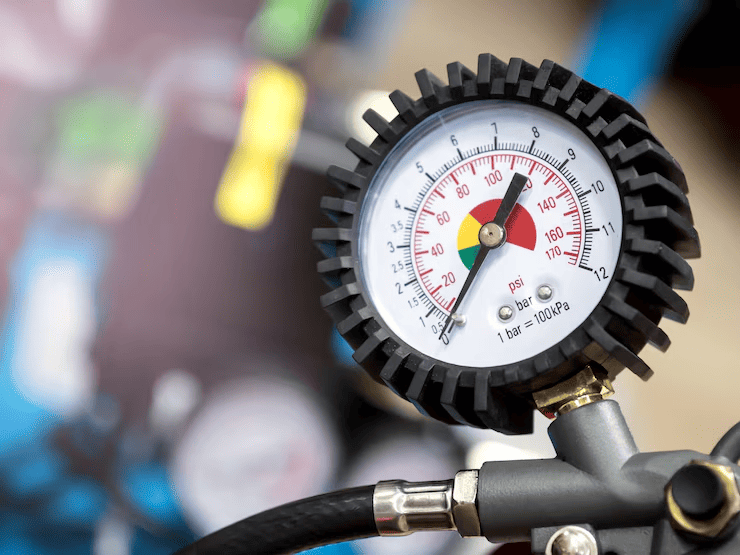
It ensures that pressure-measuring instruments meet specified tolerances and maintain traceability to national or international standards.
✅ Step-by-Step: How Pressure Calibration is Done
1. Preparation & Setup
- Identify the device: Pressure gauge, transmitter, sensor, etc.
- Review specifications: Operating range, accuracy, manufacturer recommendations.
- Use certified reference standard: e.g., Deadweight tester, Digital Pressure Calibrator, or Precision Manometer with traceability to NIST, NABL, or other national metrology bodies.
- Isolate the DUT (Device Under Test): Remove from the system or ensure safe disconnection.
2. Connection
- Connect the DUT and reference calibrator to a common pressure source using proper fittings.
- Ensure there is no leak and that air traps are removed for liquid systems.
- Zero both instruments before applying pressure.
3. Apply Known Pressure Points
- Gradually apply pressure in steps (e.g., 0%, 25%, 50%, 75%, 100% of full scale).
- Record readings from both the DUT and the reference standard.
- Repeat for both increasing and decreasing pressure cycles to check for hysteresis.
4. Compare and Analyze
- Compare DUT readings to reference values.
- Calculate deviation and uncertainty.
- Determine pass/fail status based on acceptance criteria (as per ISO 17025, manufacturer specs, or internal SOPs).
5. Adjustment (If Applicable)
- If the instrument is adjustable, perform calibration adjustments.
- Recheck the full pressure cycle after adjustment.
6. Documentation
- Generate a Calibration Certificate including:
- Instrument details
- Calibration method
- Environmental conditions
- Measured values and deviations
- Traceability references
- Uncertainty of measurement
- Technician signature and date
🧪 Common Calibration Tools
| Instrument | Calibration Tool |
|---|---|
| Analog Pressure Gauge | Deadweight Tester, Precision Pump |
| Pressure Transmitter | Digital Pressure Calibrator |
| Barometer | Environmental Simulator |
| Differential Pressure Gauge | Dual Port Calibrator |
📘 Relevant Standards & Guidelines
- ISO/IEC 17025 – Calibration laboratory competence
- ASME B40.100 – Pressure gauge calibration
- API, ISA, EN Standards – Industry-specific requirements
- NABL Guidelines – For labs in India
🔄 Frequency of Calibration
- Based on risk assessment, equipment criticality, and regulatory demands
- Typical intervals: 6 months to 1 year
📌 Summary
How is Required Pressure Calibration performed?
Through a standardized, traceable, and documented process involving:
- Use of a certified reference standard
- Applying known pressures
- Comparing and adjusting readings
- Issuing a traceable calibration certificate
Case Study on Pressure Calibration?
Title: Ensuring Product Quality and Regulatory Compliance through Timely Pressure Calibration in a Pharmaceutical Cleanroom
🏭 Industry:
Pharmaceutical Manufacturing (Sterile Injectable Facility)
🧪 Equipment Involved:
Differential Pressure Transmitters and Magnehelic Gauges
(used to monitor cleanroom pressure between classified areas – e.g., Grade A, B, C rooms)
🔍 Problem Statement:
The company observed frequent alarms in its Building Management System (BMS) indicating pressure deviation between Grade B and Grade C areas. This resulted in production downtime, and a batch recall due to suspected cross-contamination risk.
🔍 Root Cause Analysis:
- Pressure gauges had not been calibrated for over 18 months, violating the company’s SOPs and WHO GMP standards.
- Drifted pressure readings caused false room classification, compromising sterility assurance levels.
- Maintenance staff were unaware of expired calibration certificates.
🔧 Action Taken:
1. Emergency Calibration Audit
- All pressure-related instruments in cleanrooms were audited.
- 7 out of 18 devices showed deviations beyond acceptable ±3 Pa tolerance.
2. On-Site Calibration by NABL Accredited Vendor
- A third-party calibration provider performed in-situ calibration using traceable digital pressure calibrators.
- Real-time correction was made where possible.
3. Preventive System Improvement
- A calibration schedule tracking system was implemented using digital alerts.
- All calibration certificates were digitized and linked to asset IDs.
- Technicians were trained on ISO 17025 and WHO guidelines for cleanroom calibration needs.
✅ Outcome:
| Parameter | Before Calibration | After Calibration |
|---|---|---|
| Equipment Out-of-Tolerance Rate | 39% | 0% |
| Cleanroom Downtime (per month) | 16 hours | 2 hours |
| Audit Non-Conformance | Major (3 instances) | Zero |
| Batch Rejections | 1 batch/month | None for 6 months |
📘 Lessons Learned:
- Neglecting pressure calibration can lead to regulatory breaches and product loss.
- Preventive calibration not only ensures product quality but also reduces downtime and cost.
- Traceability and recordkeeping are vital for audits and compliance (FDA, WHO, GMP).
📌 Summary:
Case Study Insight: Timely and traceable pressure calibration is mission-critical in pharmaceutical environments. This real-world example demonstrates how lack of calibration leads to production, safety, and compliance failures — while proper calibration enhances system integrity and quality assurance.
White paper on Pressure Calibration?
Title: “Precision Under Pressure: The Strategic Importance of Pressure Calibration in Industrial Systems”
Executive Summary
Pressure calibration is a foundational element of industrial measurement and control. Inaccurate pressure readings can lead to unsafe operations, non-compliance, product loss, and financial penalties. This white paper outlines the purpose, methodology, standards, applications, and future trends in pressure calibration—empowering organizations to make informed decisions in quality and safety management.
1. Introduction
Pressure-measuring instruments are used across sectors like pharmaceuticals, energy, aerospace, food processing, and manufacturing. Over time, these instruments are subject to mechanical wear, environmental conditions, and process stress, resulting in measurement drift.
To ensure integrity and trust in data, regular and traceable calibration is not just good practice—it’s often a legal and regulatory requirement.
2. What is Pressure Calibration?
Pressure calibration is the process of comparing a pressure measurement device (Device Under Test – DUT) to a known reference standard, adjusting the DUT as necessary to match the standard, and documenting the results. The aim is to maintain accuracy within acceptable tolerance limits.
3. Why Pressure Calibration is Critical
✔ Regulatory Compliance
- ISO 9001:2015 – Quality Management Systems
- ISO/IEC 17025 – Competence of testing and calibration laboratories
- FDA, WHO-GMP – For pharmaceutical applications
- ASME, API – For oil, gas, and industrial safety
✔ Safety
Incorrect pressure readings can result in system overpressure, leaks, or explosions.
✔ Product Quality
Incorrect pressure in processes like autoclaving, vacuum sealing, or filtration leads to batch failure or contamination.
✔ Cost Efficiency
Proactive calibration reduces unplanned downtime and avoids losses from recalls or accidents.
4. Calibration Methods
a. Deadweight Tester
- High-accuracy calibration tool using known weights and pistons.
b. Digital Pressure Calibrator
- Portable, fast-response device with traceable digital output.
c. Comparative Method
- Pressure is applied to both the DUT and reference instrument to compare readings.
d. Automated Calibration Systems
- Controlled via software for high-volume or multi-point calibrations.
5. Calibration Process
- Pre-checks (zeroing, leak test)
- Apply known pressure steps (typically 0%, 25%, 50%, 75%, 100%)
- Record readings from DUT and reference
- Adjust (if needed) to correct drift
- Document all data in a traceable Calibration Certificate
6. Frequency of Calibration
Depends on:
- Industry regulation (e.g., 6-monthly in pharma)
- Criticality of measurement
- Operating environment
- Historical drift behavior
⚠ Example: Pressure gauges in sterile pharmaceutical environments are calibrated every 6 months as per GMP.
7. Common Challenges
- Lack of trained personnel
- Non-traceable reference equipment
- Ignored calibration schedules
- Incomplete documentation or outdated certificates
8. Future Trends
- Cloud-based calibration data logging
- AI-based predictive calibration scheduling
- Remote/IoT-based smart sensors with self-calibration features
- Integration with Asset Management Software (CMMS/ERP)
9. Case Study Snapshot
A pharma company faced batch loss due to undetected drift in pressure sensors. Post calibration system revamp, they achieved zero non-conformances in 12 months.
10. Conclusion
Pressure calibration is not just a maintenance task—it’s a strategic quality assurance practice. Organizations that integrate it into their core operations benefit from improved safety, compliance, and operational reliability.
Appendices
- ✅ Sample Calibration Certificate Format
- 📋 Pressure Calibration SOP Checklist
- 📚 List of ISO/ASTM/API Standards
📌 Call to Action
To maintain your compliance and operational excellence, implement a robust, traceable, and scheduled pressure calibration system—backed by trained personnel and certified tools.
Industrial Application of Pressure Calibration?
Pressure calibration plays a critical role in almost every industrial sector where pressure-based measurements are used for process control, safety, compliance, and quality assurance. Below are industry-specific applications and how pressure calibration ensures reliability and regulatory conformity.
🏭 1. Pharmaceutical & Biotechnology
🔹 Application:
- Monitoring cleanroom differential pressure
- Sterilization via autoclaves
- Bioreactor pressure control
🔹 Why Calibration Is Critical:
- Required for cGMP, WHO, FDA compliance
- Prevents contamination and batch rejection
- Ensures validated and reproducible process conditions
⚡ 2. Oil & Gas / Petrochemical
🔹 Application:
- Wellhead pressure monitoring
- Pipeline integrity testing
- Pressure safety valve (PSV) calibration
🔹 Why Calibration Is Critical:
- Prevents overpressure accidents
- Ensures compliance with API, ASME, ISO standards
- Minimizes downtime and environmental risk
✈️ 3. Aerospace & Defense
🔹 Application:
- Altitude chamber calibration
- Aircraft cabin pressure systems
- Hydraulic actuator pressure testing
🔹 Why Calibration Is Critical:
- Mission-critical performance
- Follows AS9100, FAA, MIL-STD standards
- Supports life-safety in high-risk conditions
🚗 4. Automotive Industry
🔹 Application:
- Fuel injection pressure testing
- Brake system testing
- Airbag deployment system calibration
🔹 Why Calibration Is Critical:
- Supports ISO/TS 16949 quality control
- Ensures customer safety and emission compliance
🥫 5. Food & Beverage
🔹 Application:
- Pressure-controlled sterilization (e.g., retorts)
- Carbonation pressure in beverage bottling
- Pressure in pasteurizers and packaging systems
🔹 Why Calibration Is Critical:
- Complies with HACCP, ISO 22000, and FDA guidelines
- Protects food safety and product shelf life
🌊 6. Water & Wastewater Management
🔹 Application:
- Pressure control in filtration systems
- Pump pressure regulation
- Monitoring line pressure in distribution systems
🔹 Why Calibration Is Critical:
- Prevents water loss and equipment failure
- Maintains service pressure for public safety
- Complies with ISO 24512, local government norms
🔋 7. Power Generation (Thermal, Nuclear, Renewable)
🔹 Application:
- Steam boiler pressure monitoring
- Turbine control systems
- Pressure sensors in hydraulic actuators
🔹 Why Calibration Is Critical:
- Essential for safety interlocks
- Mandated by IEC, ASME, and national safety boards
- Prevents catastrophic equipment failure
🧪 8. Testing and Calibration Laboratories
🔹 Application:
- Secondary calibration standards for clients
- Cross-checking pressure calibrators and gauges
🔹 Why Calibration Is Critical:
- Must meet ISO/IEC 17025 for accreditation
- Traceability to national metrology standards
🧯 9. Fire & Safety Equipment Manufacturing
🔹 Application:
- Calibration of pressure gauges on fire extinguishers
- Breathing apparatus pressure control
🔹 Why Calibration Is Critical:
- Ensures safety of emergency response equipment
- Mandatory for compliance with NFPA, ISO, and EN standards
💡 Summary Table:
| Industry | Example Equipment | Standard Followed |
|---|---|---|
| Pharma | Magnehelic gauge, autoclaves | WHO-GMP, FDA |
| Oil & Gas | Transmitters, PSVs | API, ASME |
| Aerospace | Cabin pressure sensors | FAA, AS9100 |
| Automotive | Fuel pressure testers | ISO/TS 16949 |
| Food & Beverage | Retorts, pressure cookers | HACCP, ISO 22000 |
| Water Utility | Pump gauges, filtration lines | ISO 24512, BIS |
| Power Plants | Boiler pressure sensors | IEC, ASME |
| Testing Labs | Digital calibrators | ISO/IEC 17025 |
📌 Conclusion:
Pressure calibration is not optional—it is essential.
Whether ensuring sterile environments in pharma or preventing explosions in oil and gas, the industrial application of pressure calibration is fundamental to process safety, quality assurance, and regulatory compliance.
References
- ^ Taskos, Nikolaos (2020-09-16). “Pressure Sensing 101 – Absolute, Gauge, Differential & Sealed pressure”. ES Systems. Retrieved 2020-09-16.
- ^ Bequette, B. Wayne (2003). Process control: modeling, design, and simulation. Prentice Hall. p. 735. ISBN 978-0-13-353640-9.
- ^ NIST
- ^ Jump up to:a b US Navy Diving Manual 2016, Table 2‑10. Pressure Equivalents..
- ^ Jump up to:a b Staff (2016). “2 – Diving physics”. Guidance for Diving Supervisors (IMCA D 022 August 2016, Rev. 1 ed.). London, UK: International Marine Contractors’ Association. p. 3.
- ^ Page 2-12.
- ^ US Navy Diving Manual 2016, Section 18‑2.8.3.
- ^ “Understanding Vacuum Measurement Units”. 9 February 2013.
- ^ Nagata, Tomio; Terabe, Hiroaki; Kuwahara, Sirou; Sakurai, Shizuki; Tabata, Osamu; Sugiyama, Susumu; Esashi, Masayoshi (1992-08-01). “Digital compensated capacitive pressure sensor using CMOS technology for low-pressure measurements”. Sensors and Actuators A: Physical. 34 (2): 173–177. doi:10.1016/0924-4247(92)80189-A. ISSN 0924-4247.
- ^ Lemme, Max C.; Wagner, Stefan; Lee, Kangho; Fan, Xuge; Verbiest, Gerard J.; Wittmann, Sebastian; Lukas, Sebastian; Dolleman, Robin J.; Niklaus, Frank; van der Zant, Herre S. J.; Duesberg, Georg S.; Steeneken, Peter G. (2020-07-20). “Nanoelectromechanical Sensors Based on Suspended 2D Materials”. Research. 2020: 1–25. Bibcode:2020Resea202048602L. doi:10.34133/2020/8748602. PMC 7388062. PMID 32766550.
- ^ “What is a Pressure Sensor?”. HBM. Retrieved 2018-05-09.
- ^ Elastic hologram’ pages 113-117, Proc. of the IGC 2010, ISBN 978-0-9566139-1-2 here: http://www.dspace.cam.ac.uk/handle/1810/225960
- ^ “Characterization of quartz Bourdon-type high-pressure transducers”. Metrologia. November 2005. doi:10.1088/0026-1394/42/6/S20.
- ^ Andrews, M. K.; Turner, G. C.; Harris, P. D.; Harris, I. M. (1993-05-01). “A resonant pressure sensor based on a squeezed film of gas”. Sensors and Actuators A: Physical. 36 (3): 219–226. doi:10.1016/0924-4247(93)80196-N. ISSN 0924-4247.
- ^ Dolleman, Robin J.; Davidovikj, Dejan; Cartamil-Bueno, Santiago J.; van der Zant, Herre S. J.; Steeneken, Peter G. (2016-01-13). “Graphene Squeeze-Film Pressure Sensors”. Nano Letters. 16 (1): 568–571. arXiv:1510.06919. Bibcode:2016NanoL..16..568D. doi:10.1021/acs.nanolett.5b04251. ISSN 1530-6984. PMID 26695136. S2CID 23331693.
- ^ Milburn, Hugh. “The NOAA DART II Description and Disclosure” (PDF). noaa.gov. NOAA, U.S. Government. Retrieved 4 April 2020.
- ^ Eble, M. C.; Gonzalez, F. I. “Deep-Ocean Bottom Pressure Measurements in the Northeast Pacific” (PDF). noaa.gov. NOAA, U.S. Government. Retrieved 4 April 2020.
- ^ Methods for the Measurement of Fluid Flow in Pipes, Part 1. Orifice Plates, Nozzles and Venturi Tubes. British Standards Institute. 1964. p. 36.
- ^ Manual of Barometry (WBAN) (PDF). U.S. Government Printing Office. 1963. pp. A295 – A299.
- ^ [Was: “fluidengineering.co.nr/Manometer.htm”. At 1/2010 that took me to bad link. Types of fluid Manometers]
- ^ “Techniques of High Vacuum”. Tel Aviv University. 2006-05-04. Archived from the original on 2006-05-04.
- ^ Beckwith, Thomas G.; Marangoni, Roy D. & Lienhard V, John H. (1993). “Measurement of Low Pressures”. Mechanical Measurements (Fifth ed.). Reading, MA: Addison-Wesley. pp. 591–595. ISBN 0-201-56947-7.
- ^ Hiscox, Gardner, D. (1914). Mechanical movements, powers and devices; a treatise describing mechanical movements and devices used in constructive and operative machinery and the mechanical arts, being practically a mechanical dictionary, commencing with a rudimentary description of the early known mechanical powers and detailing the various motions, appliances and inventions used in the mechanical arts to the present time, including a chapter on straight line movements, by Gardner D. Hiscox, (14 ed.). New York: The Norman W. Henley publishing co. p. 50. LCCN 14011376. OCLC 5069239.
- ^ The Engine Indicator Canadian Museum of Making
- ^ Boyes, Walt (2008). Instrumentation Reference Book (Fourth ed.). Butterworth-Heinemann. p. 1312.
- ^ “Characterization of quartz Bourdon-type high-pressure transducers”. ResearchGate. Retrieved 2019-05-05.
- ^ Product brochure from Schoonover, Inc
- ^ A. Chambers, Basic Vacuum Technology, pp. 100–102, CRC Press, 1998. ISBN 0585254915.
- ^ John F. O’Hanlon, A User’s Guide to Vacuum Technology, pp. 92–94, John Wiley & Sons, 2005. ISBN 0471467154.
- ^ Robert M. Besançon, ed. (1990). “Vacuum Techniques”. The Encyclopedia of Physics (3rd ed.). Van Nostrand Reinhold, New York. pp. 1278–1284. ISBN 0-442-00522-9.
- ^ Nigel S. Harris (1989). Modern Vacuum Practice. McGraw-Hill. ISBN 978-0-07-707099-1.
- ^ http://www.wrh.noaa.gov/slc/projects/wxcalc/formulas/pressureAltitude.pdf Archived 2017-07-03 at the Wayback Machine National Oceanic and Atmospheric Administration
- ^ Dunnicliff, John (1993) [1988]. Geotechnical Instrumentation for Monitoring Field Performance. Wiley-Interscience. p. 117. ISBN 0-471-00546-0.
- ^ Casagrande, A (1949). Soil Mechanics in the design and Construction of the Logan Airport. J. Boston Soc. Civil Eng., Vol 36, No. 2. pp. 192–221.
- ^ Manual on Suburface Investigations, 1988, American Association of State Highway and Transportation Officials page 182
- “Pressure Regulator vs. Backpressure Regulator: When to use one or the other…and when to use both!”. plastomatic.com. Retrieved 19 March 2020.
- ^ Jump up to:a b “Definition of Back Pressure Regulator: What do back pressure regulators do?”. www.equilibar.com. Retrieved 19 March 2020.>
- ^ “Aircraft Pressure Regulators”. www.valcor.com. Retrieved 19 March 2020.
- ^ “Aerospace Pressure Regulators”. www.valcor.com. Retrieved 19 March 2020.
- ^ NOAA Diving Program (U.S.) (28 February 2001). Joiner, James T (ed.). NOAA Diving Manual, Diving for Science and Technology (4th ed.). Silver Spring, Maryland: National Oceanic and Atmospheric Administration, Office of Oceanic and Atmospheric Research, National Undersea Research Program. ISBN 978-0-941332-70-5. CD-ROM prepared and distributed by the National Technical Information Service (NTIS)in partnership with NOAA and Best Publishing Company
- ^ “Aviation Supplemental Oxygen”. www.cfinotebook.net. Archived from the original on 19 February 2023. Retrieved 12 July 2023.
- ^ “14 CFR § 25.1439 – Protective breathing equipment”. www.law.cornell.edu. Retrieved 2 August 2023.
- ^ Tiep, B.; Carter, R. (2008). “Oxygen conserving devices and methodologies”. Chronic Respiratory Disease. 5 (2). crd.sagepub.com: 109–114. doi:10.1177/1479972308090691. PMID 18539725. S2CID 6141420.
- ^ “Service Manual: Mini Regulator” (PDF). www.floteco2.com. Retrieved 9 August 2023.
- ^ Jump up to:a b c Copp, D. L. (1967). Gas Transmission and Distribution. London: Walter King Ltd.
- ^ Jump up to:a b “A Lightweight, and Extremely Robust, Built In Breathing System for Hyperbaric Chambers” (PDF). Aberdeen, Scotland: C-Tecnics Ltd. Archived from the original (PDF) on 25 September 2018. Retrieved 25 September 2018.
- ^ Jump up to:a b c Port, Jeff (21 May 2019). “Back Pressure Regulator vs Pressure Reducing Regulator: What’s the Difference?”. blog.kimray.com. Retrieved 19 March 2020.
- ^ “Divex back pressure regulator”. Retrieved 19 March 2020.
- ^ “Gas reclaim back pressure regulator”. Retrieved 19 March 2020 – via patents.google.com.
- ^ “Helmet gas reclaim valve”. www.subspec.it. Retrieved 19 March 2020.
- ^ “Reclaim Basic Set Up” (PDF). www.subseasa.com. Retrieved 10 March 2020.
- JCGM 200:2008 International vocabulary of metrology Archived 2019-10-31 at the Wayback Machine — Basic and general concepts and associated terms (VIM)
- ^ Jump up to:a b ISO 9001: “Quality management systems — Requirements” (2008), section 7.6.
- ^ Jump up to:a b ISO 17025: “General requirements for the competence of testing and calibration laboratories” (2005), section 5.
- ^ Faison, C. Douglas; Brickenkamp, Carroll S. (March 2004). “Calibration Laboratories: Technical Guide for Mechanical Measurements” (PDF). NIST Handbook 150-2G. NIST. Archived from the original (PDF) on 12 May 2015. Retrieved 14 June 2015.
- ^ “Metrology, Pressure, Thermal & Eletrotechnical Measurement and Calibration”. Fluid Control Research Institute (FCRI), Ministry of Heavy Industries & Public Enterprises, Govt. of India. Archived from the original on 14 June 2015. Retrieved 14 June 2015.
- ^ Haider, Syed Imtiaz; Asif, Syed Erfan (16 February 2011). Quality Control Training Manual: Comprehensive Training Guide for API, Finished Pharmaceutical and Biotechnologies Laboratories. CRC Press. p. 49. ISBN 978-1-4398-4994-1.
- ^ Bare, Allen (2006). Simplified Calibration Interval Analysis (PDF). Aiken, SC: NCSL International Workshop and Symposium, under contract with the Office of Scientific and Technical Information, U.S. Department of Energy. pp. 1–2. Archived (PDF) from the original on 2007-04-18. Retrieved 28 November 2014.
- ^ “ANSI/NCSL Z540.3-2006 (R2013)”. The National Conference of Standards Laboratories (NCSL) International. Archived from the original on 2014-11-20. Retrieved 28 November 2014.
- ^ “Calibration Systems Requirements (Military Standard)” (PDF). Washington, DC: U.S. Department of Defense. 1 August 1998. Archived from the original (PDF) on 2005-10-30. Retrieved 28 November 2014.
- ^ Jump up to:a b Ligowski, M.; Jabłoński, Ryszard; Tabe, M. (2011), Jabłoński, Ryszard; Březina, Tomaš (eds.), Procedure for Calibrating Kelvin Probe Force Microscope, Mechatronics: Recent Technological and Scientific Advances, p. 227, doi:10.1007/978-3-642-23244-2, ISBN 978-3-642-23244-2, LCCN 2011935381
- ^ Military Handbook: Evaluation of Contractor’s Calibration System (PDF). U.S. Department of Defense. 17 August 1984. p. 7. Archived (PDF) from the original on 2014-12-04. Retrieved 28 November 2014.
- ^ Procedure for calibrating pressure gauges (USBR 1040) (PDF). U.S. Department of the Interior, Bureau of Reclamation. pp. 70–73. Archived (PDF) from the original on 2013-05-12. Retrieved 28 November 2014.
- ^ “KNC Model 3666 Automatic Pressure Calibration System” (PDF). King Nutronics Corporation. Archived from the original (PDF) on 2014-12-04. Retrieved 28 November 2014.
- ^ “the definition of calibrate”. Dictionary.com. Retrieved 18 March 2018.
- ^ Baber, Zaheer (1996). The Science of Empire: Scientific Knowledge, Civilization, and Colonial Rule in India. SUNY Press. pp. 23–24. ISBN 978-0-7914-2919-8.
- ^ Franceschini, Fiorenzo; Galetto, Maurizio; Maisano, Domenico; Mastrogiacomo, Luca; Pralio, Barbara (6 June 2011). Distributed Large-Scale Dimensional Metrology: New Insights. Springer Science & Business Media. pp. 117–118. ISBN 978-0-85729-543-9.
- ^ Ackroyd, Peter (16 October 2012). Foundation: The History of England from Its Earliest Beginnings to the Tudors. St. Martin’s Press. pp. 133–134. ISBN 978-1-250-01367-5.
- ^ Bland, Alfred Edward; Tawney, Richard Henry (1919). English Economic History: Select Documents. Macmillan Company. pp. 154–155.
- ^ Tilford, Charles R (1992). “Pressure and vacuum measurements” (PDF). Physical Methods of Chemistry: 106–173. Archived from the original (PDF) on 2014-12-05. Retrieved 28 November 2014.
- ^ Fridman, A. E.; Sabak, Andrew; Makinen, Paul (23 November 2011). The Quality of Measurements: A Metrological Reference. Springer Science & Business Media. pp. 10–11. ISBN 978-1-4614-1478-0.
- ^ Cuscó, Laurence (1998). Guide to the Measurement of Pressure and Vacuum. London: The Institute of Measurement and Control. p. 5. ISBN 0-904457-29-X.